Not sure which test method fits your project?
Compare stable temperature and humidity exposure, controlled rapid cycling and abrupt thermal shock before opening a model-specific product page.
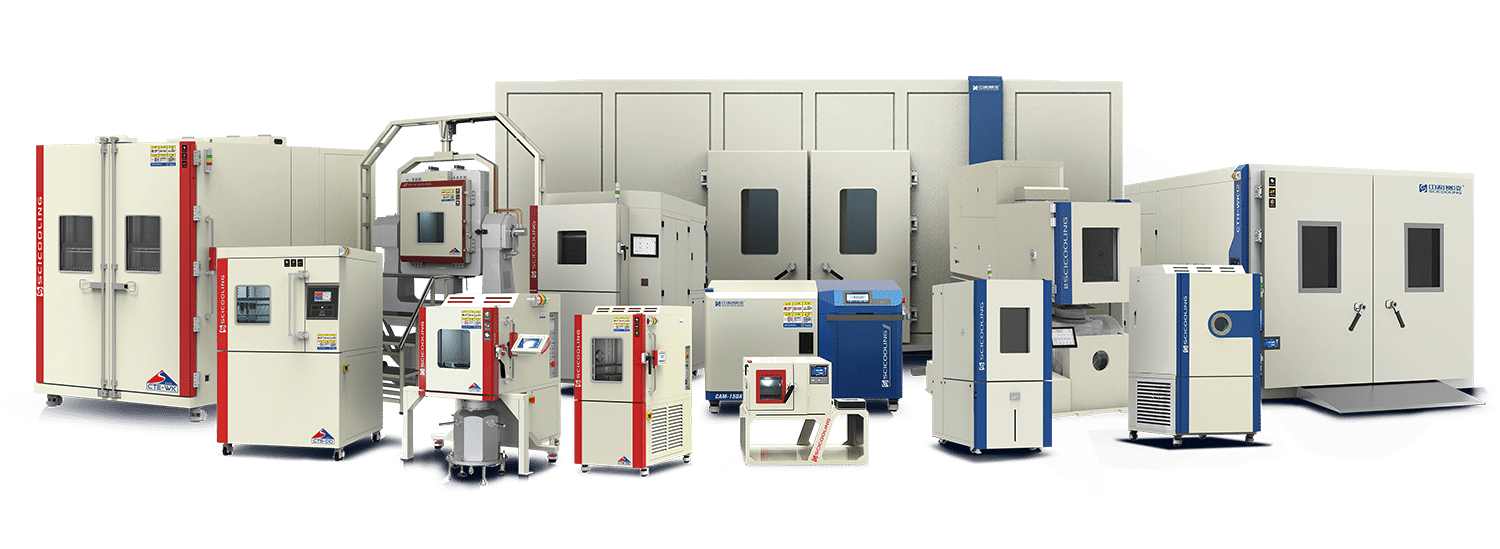
Explore SCI environmental simulation equipment by test condition, integration level and operating range. Each system can be configured around your specimen, profile, standards and site requirements.
Compare stable temperature and humidity exposure, controlled rapid cycling and abrupt thermal shock before opening a model-specific product page.

The existing Products page remains the complete directory. The new landing-page entrance does not replace it.
Share the specimen, temperature range, ramp rate, humidity, load and required standard.
From controlled temperature and humidity exposure to rapid cycling and severe thermal shock, SCI helps engineering teams reproduce demanding environments with stable control and application-specific support.

Three clear paths from stable exposure to controlled cycling and abrupt transition.
Click each method to see how the specimen experiences the test.
Source hierarchy is explicit: original controller, recorder and equipment photographs are shown whenever available. A web chart is generated only when the source exists solely as Excel or CSV data.
The 408 L page gives buyers a concrete product structure. This proof layer adds the wider climate-platform evidence needed to judge performance—not only dimensions.

Evidence boundary: every record below is shown in its supplied visual form. Missing model, specimen and load information is stated instead of inferred; final acceptance still follows the confirmed order and method.
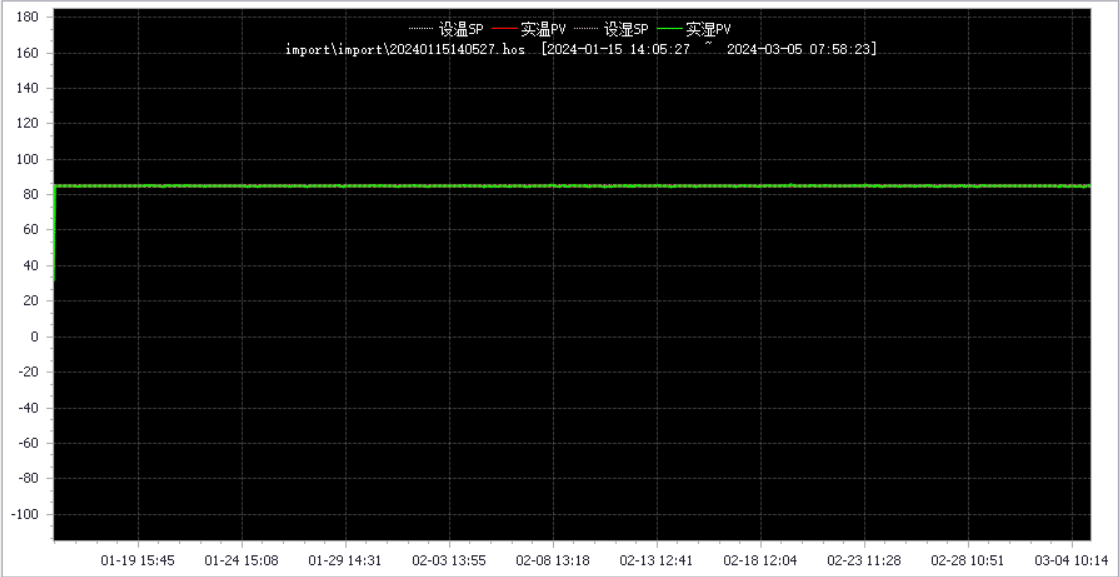
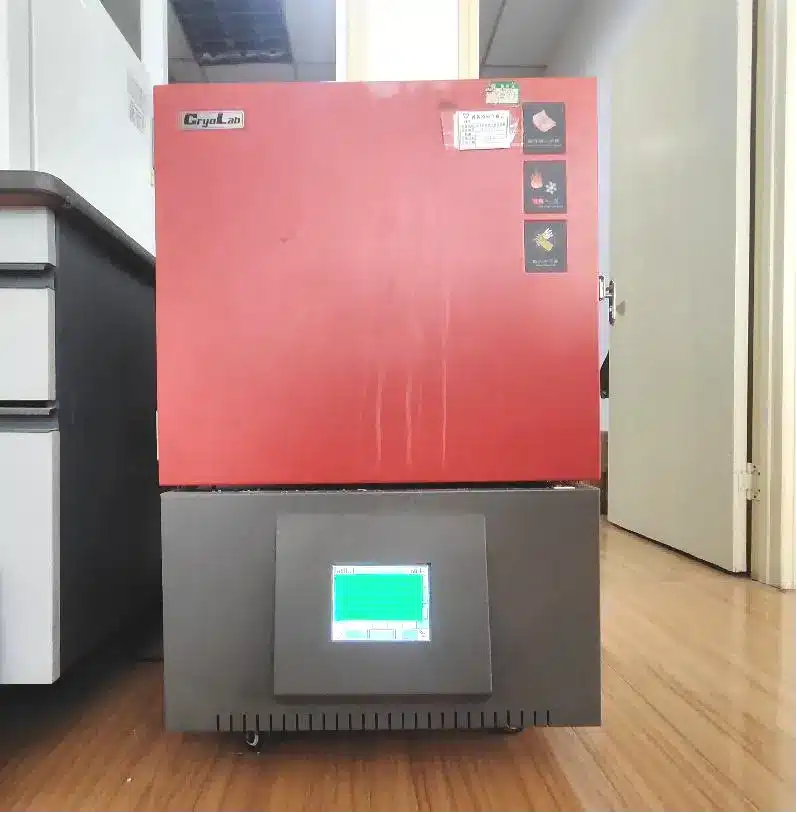
Select an original recorder export, controller screen or physical controller photograph. No curve in this five-record module is redrawn.

SCI response: the supplied recorder export is displayed without curve reconstruction or smoothing.
How to use this evidence: records are presented as project and factory-verification proof, not as a universal guarantee for every model. Customer identity, specimen load, selected options, ambient condition and acceptance standard must be confirmed before external case publication or order acceptance.
Switch between four representative records. Each view states the model, program, load basis and the result that matters. Final acceptance still follows the confirmed chamber and specimen.
A 125°C to −40°C program with an actual specimen load, reported from the source curve and calculation sheet.
Case library: 7 rapid-change, 14 thermal-shock, 10 temperature/humidity and 6 low-pressure records. Results are case-specific, not universal guarantees.
The supplied comparison evidence records an actual 33% reduction. Every commercial forecast below uses a more conservative 30% planning factor, multiplied by the customer's chamber quantity, baseline energy use and real operating schedule.
The supplied same-condition comparison supports an actual 33% result. The customer-facing calculator uses 30% throughout.
Source basis: supplied November 2024 comparison material and test summary. The benchmark manufacturer is intentionally not named. Results are condition-specific and may vary with model, specimen load, ambient conditions, humidity, profile and measurement method.
Matches cooling and heating output to the actual thermal demand instead of creating avoidable hot–cold compensation.
Adjusts compressor speed and delivered capacity as the chamber moves from pull-down to stable operation.
Fine refrigerant metering helps reduce cycling losses and improves efficiency across changing operating points.
Select a country and operating pattern, then adjust every assumption to match the customer's actual electricity bill and test schedule.
Documented inspection depth and named long-running machines make the ownership story concrete.

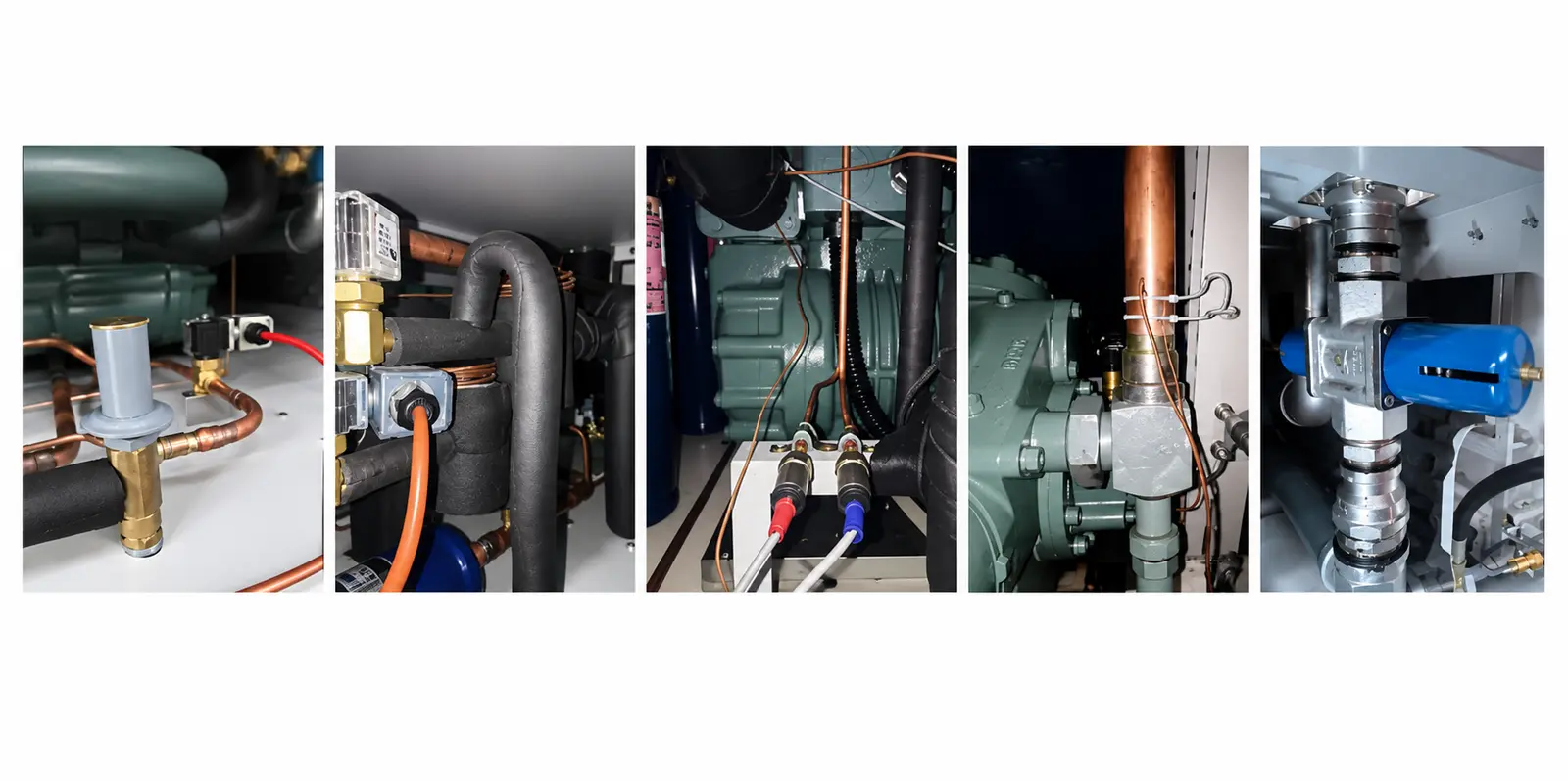
Electrical, structure and appearance, refrigeration, and final commissioning are reviewed through a controlled release checklist.
Three supplied records show different chamber types continuing in service across long operating histories, relocations and routine maintenance.

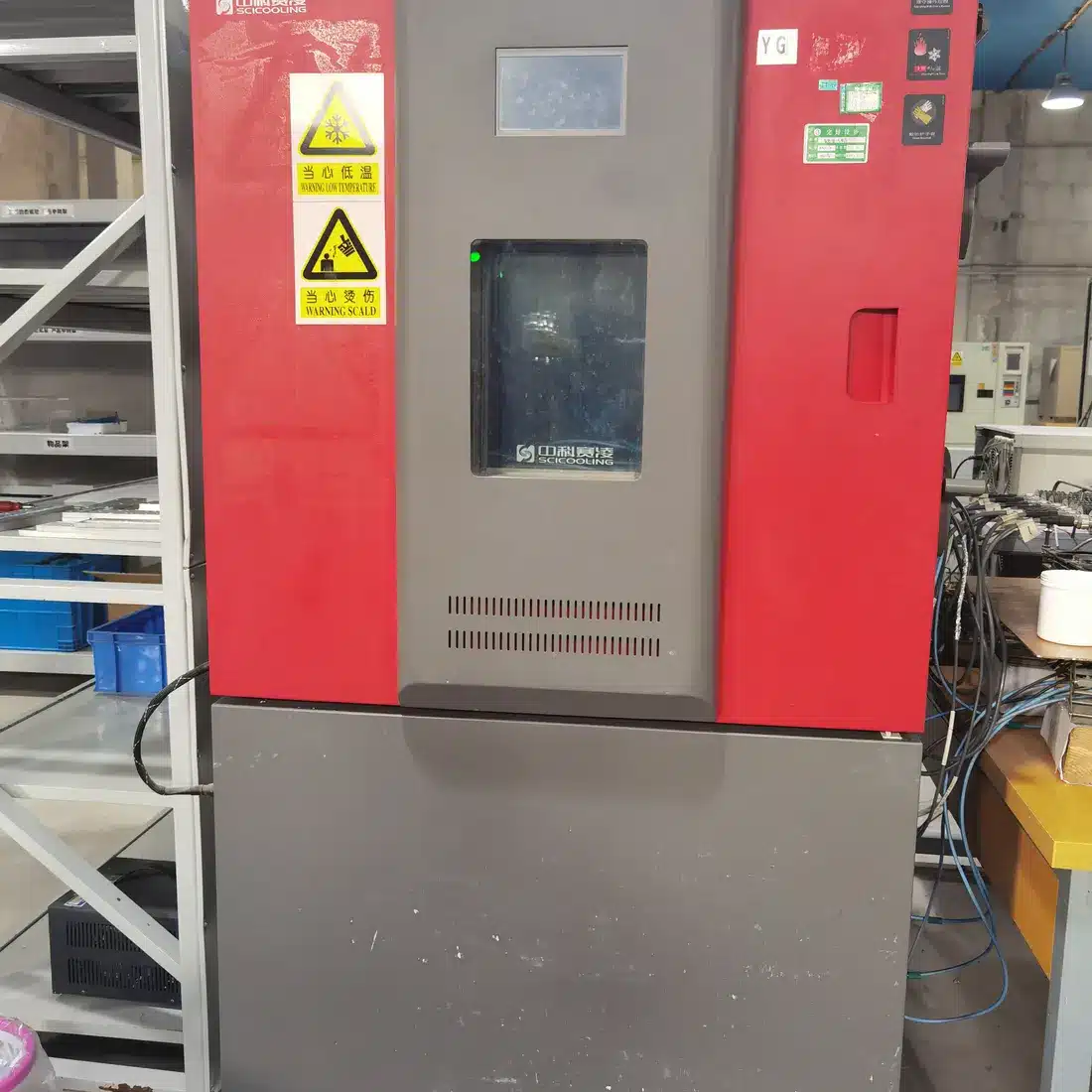
Supplied in 2008; the cited unit remains in operation.

Supplied in 2010 with multiple recorded relocations.

Supplied in 2011; routine-maintenance service history.
Service-age evidence applies to the cited machines and operating histories; it is not a universal lifetime guarantee.
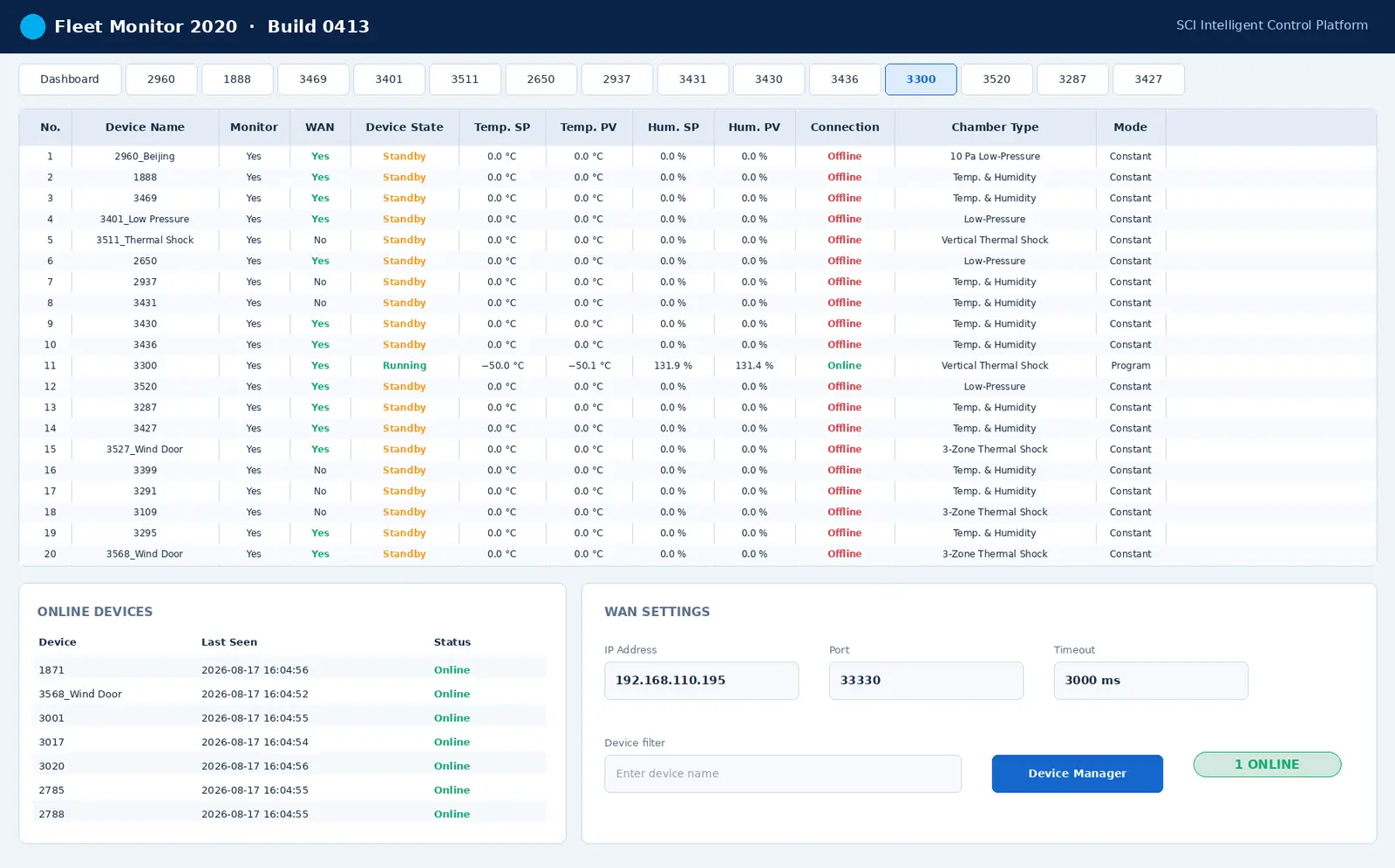
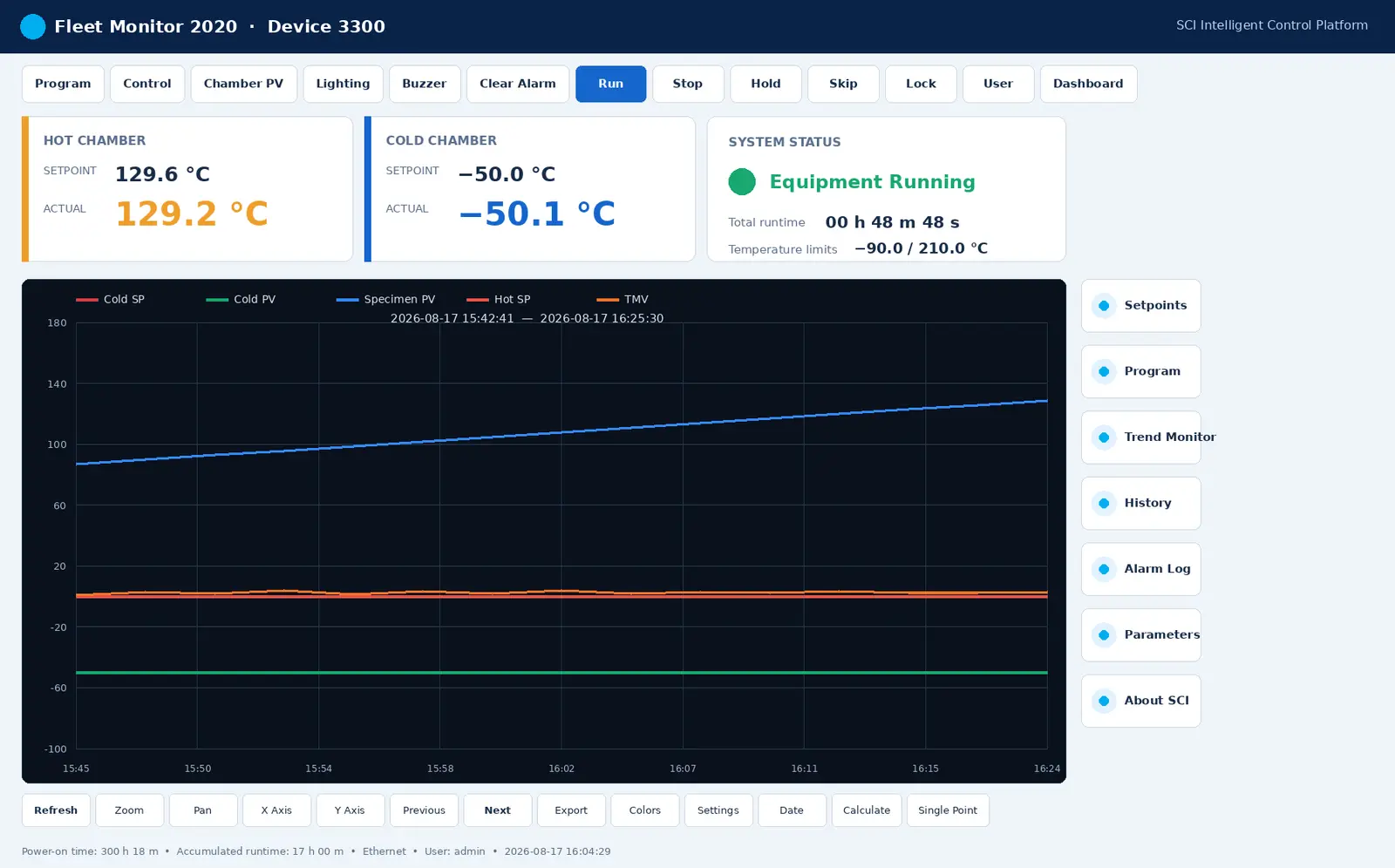
Fleet status, alarm context and live curves give the service team a shared evidence trail before deciding whether guided action or an on-site visit is required.

See operating state, current values, program progress and alarm information across connected chambers.

Share the same trend view with technical support to narrow the likely cause and prepare the next action.
Remote functions depend on the selected controller, network configuration and customer authorization. Hardware faults may still require on-site service.
Each answer links to the next useful level of detail, so visitors do not reach a dead end.
Review an actual model structure: dimensions, configuration, performance evidence, standards and engineering documents.
Open the 408L product page →Enter a lab or factory size, apply installation clearances, then auto-place, drag and rotate equipment.
Plan equipment capacity →Answers link directly to footprint drawings, performance curves, standards and the planner—not generic contact pages.
Read engineering FAQ →Five connected steps reduce technical and delivery uncertainty.
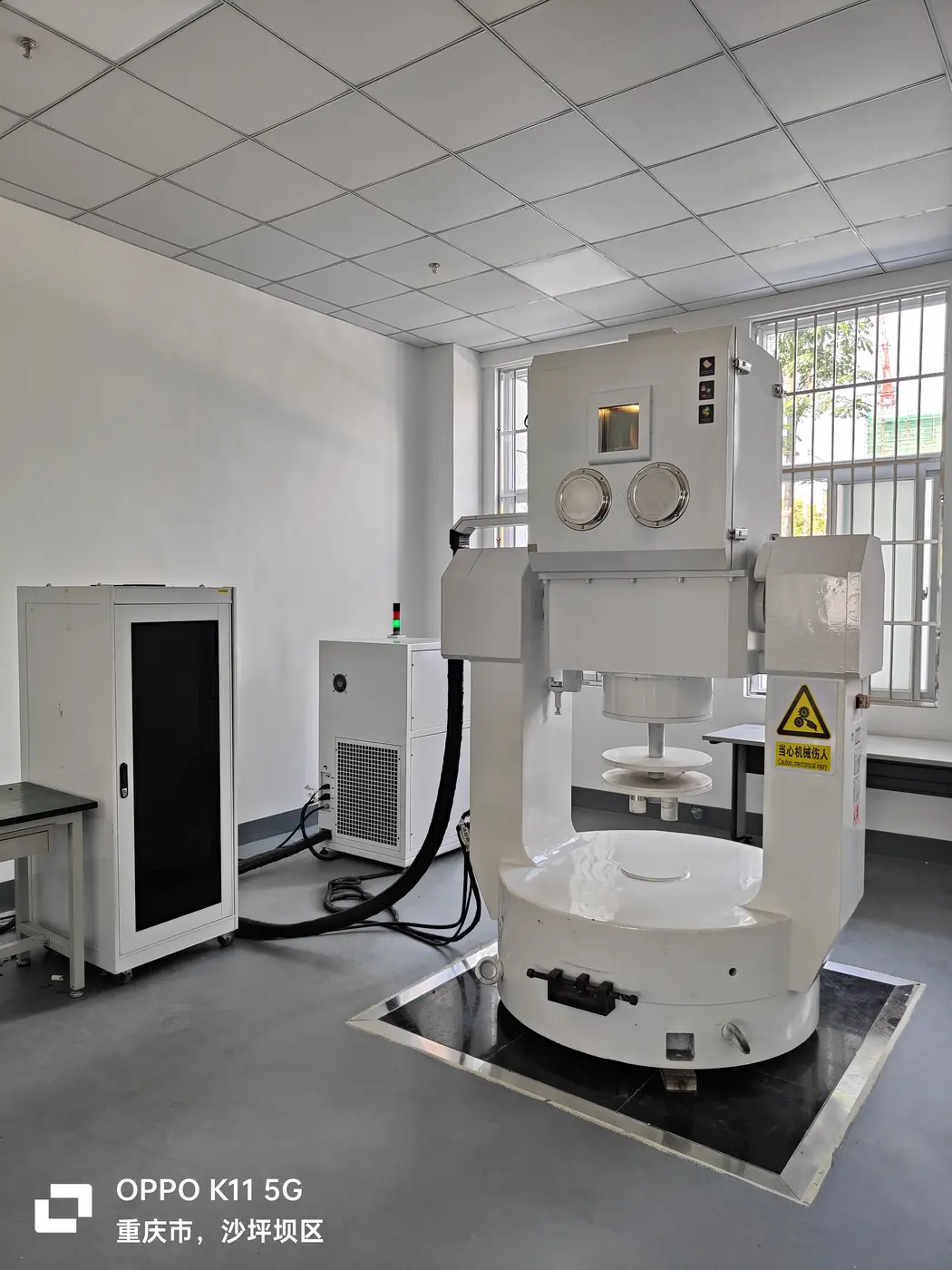
Real SCI assets replace generic stock scenes and empty superlatives.
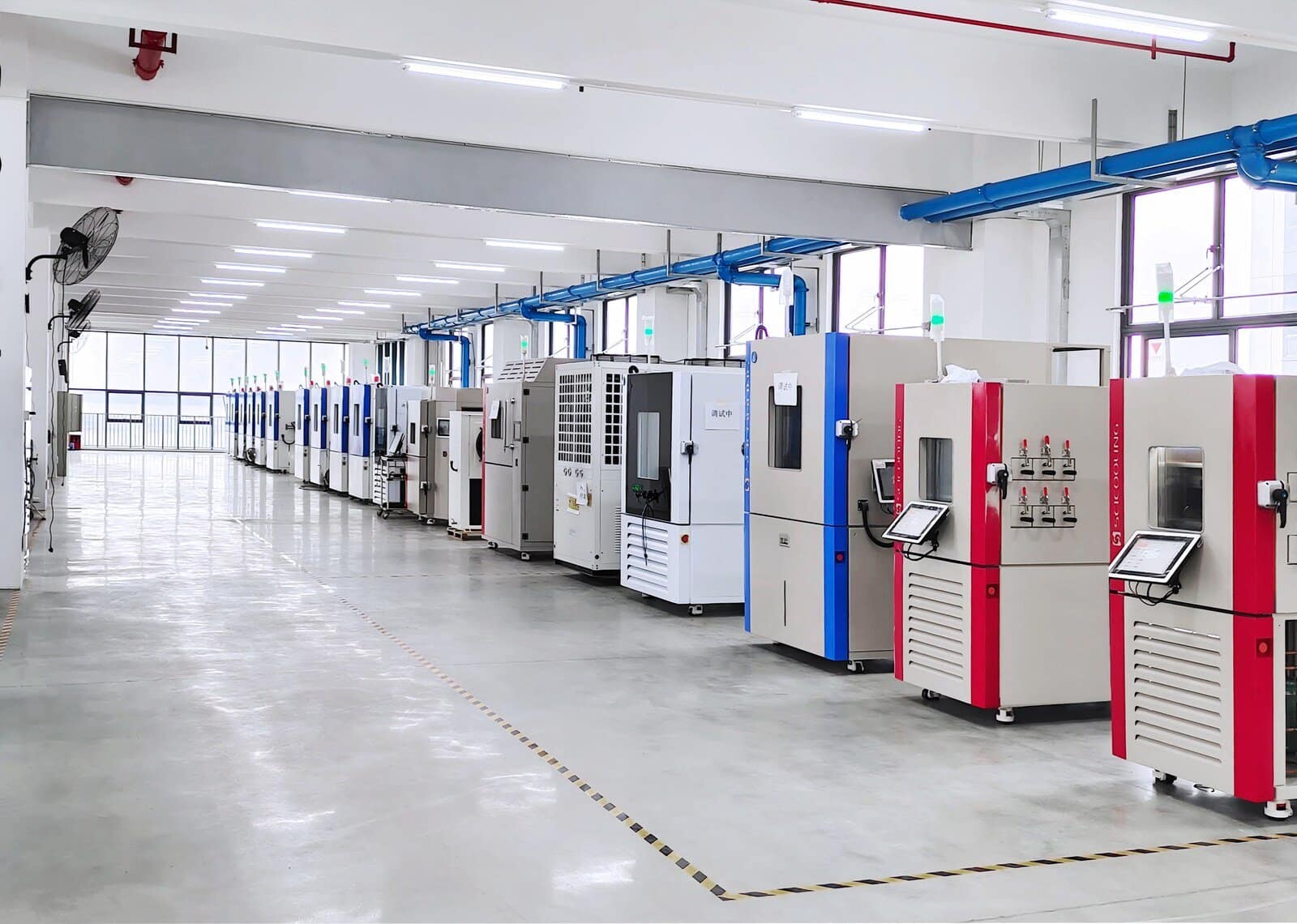
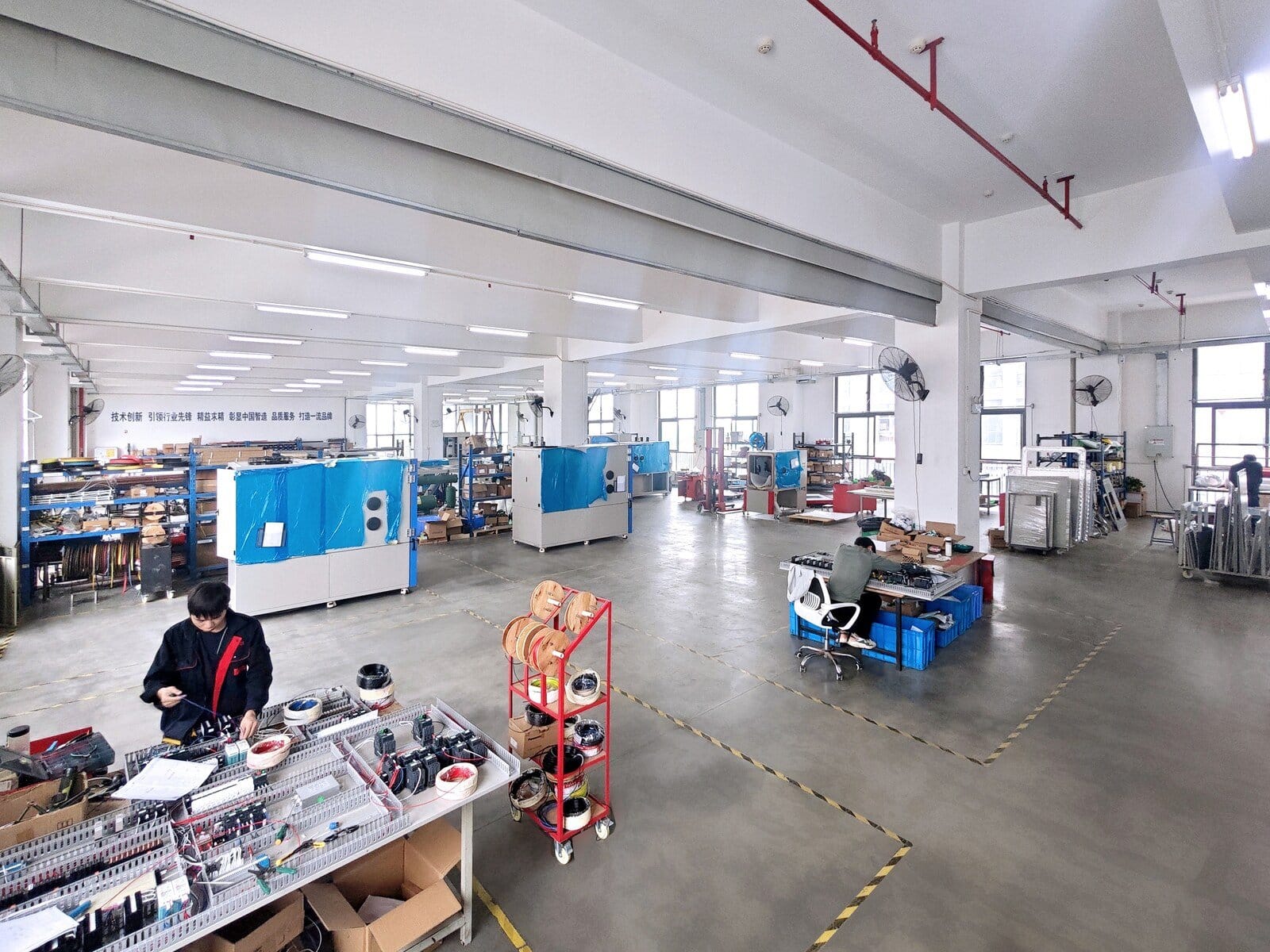
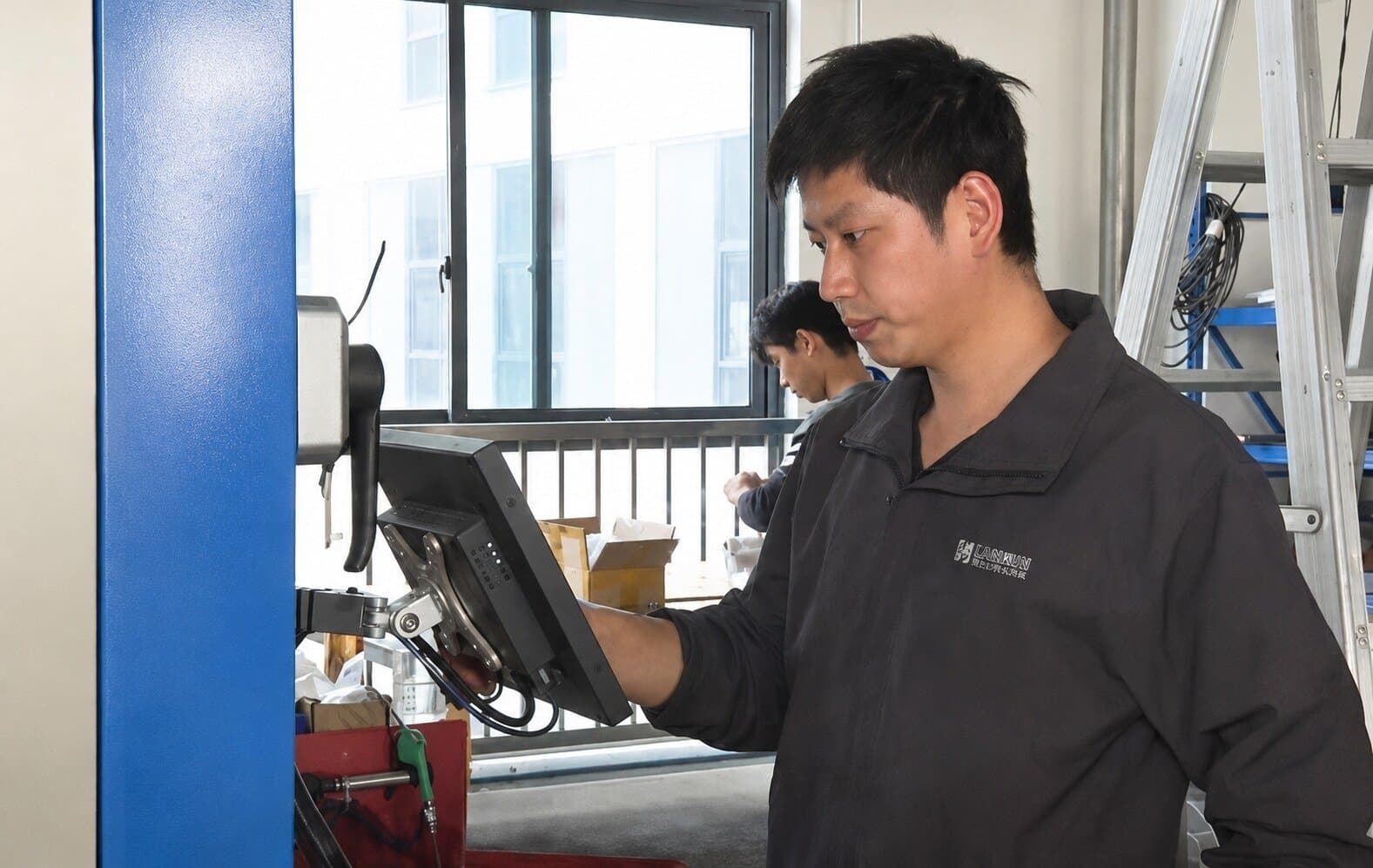
ZHONGSHAN COMMISSIONING WORKSHOP
SYSTEM ASSEMBLY
FUNCTIONAL TESTINGStart with the common mistakes that affect every chamber, then filter by climate chamber, rapid temperature change, thermal shock, energy efficiency or remote service.
Tell us what you need to test, the environmental profile you must reproduce and the performance your project requires.
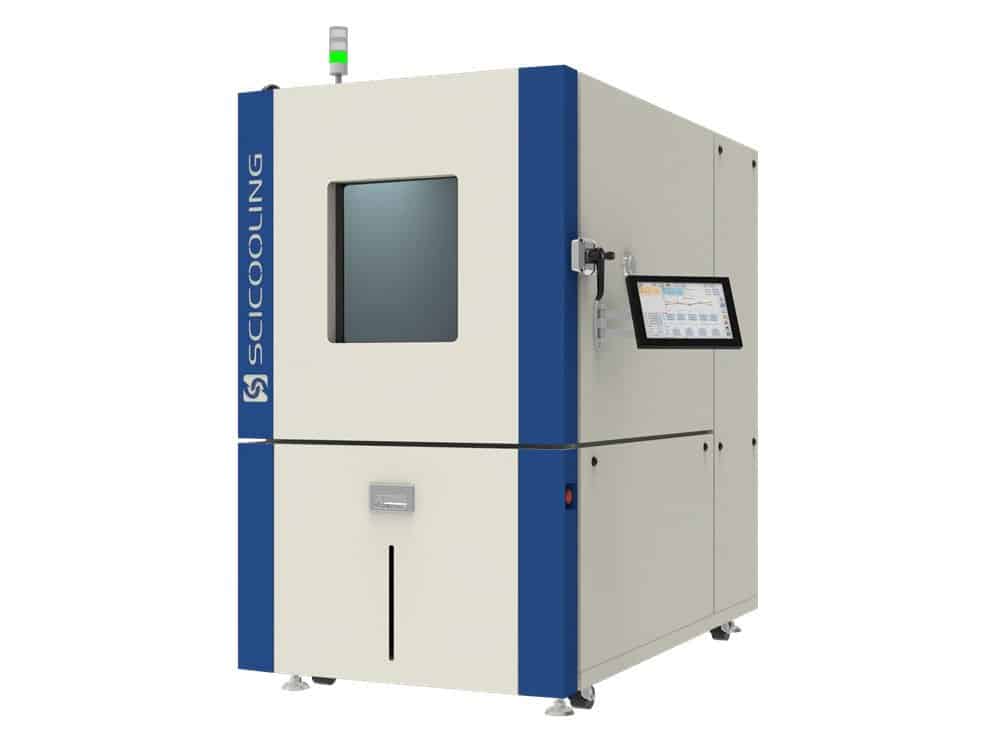
A model-specific product page that connects practical configuration, verified physical dimensions, test evidence, standards, documents and space planning in one decision path.

The model table carries the buyer from nominal capacity to the installation information required for a real project.
Nominal liters do not answer whether a chamber can be installed, serviced and operated in the available room. This section connects the approved equipment outline to the interactive layout planner.

Representative case H1 / SP2790 shows three demanding control points from the supplied temperature-and-humidity record. The exact 408 L configuration must be confirmed in the FAT package.
15°C / 95% RH: measured 15.04°C / 94.90% RH · 20°C / 98% RH: 19.98°C / 97.91% RH · 60°C / 10% RH: 60.00°C / 9.93% RH.
Review rapid-change, thermal-shock, humidity and low-pressure examples before choosing the final test method and chamber configuration.
Open the Four-Category Curve Library →The product page now continues beyond selection into site conditions, factory release and operational support.

Electrical, structure, refrigeration and commissioning checks feed operator self-check, next-process verification and final QA release.
Review quality and long-running cases →
Connected configurations can share fleet status, alarm context and live SP/PV curves with technical support. Network access and controller options require confirmation.
Standards are reviewed with the specimen, load, fixtures, profile and acceptance basis—not displayed as logo decoration.
Temperature, damp heat and related procedures require a configuration-level review.
Confirm edition, range, specimen state and test-point definition before selection.
Translate the actual sequence, heat load and interfaces into the chamber specification.
Downloads and requests stay close to the product decision instead of disappearing into a generic resource center.
For controlled cycling in one workspace.
Compare method →For abrupt hot-to-cold transitions.
Compare method →Check how many units can fit with clearance zones.
Open planner →The same global enquiry component is reused here, pre-contextualized for this product page.
Set the destination region, room and site conditions, then auto-place, drag and validate SCI chambers in synchronized plan and height views.
Reference footprint 1.00 × 1.85 m; height 1.55 m.
Review the product footprint →The production version can attach the plan JSON/PDF and selected product list to the same Elementor enquiry workflow used sitewide.
Send room dimensions, selected equipment and the required installation standard for engineering confirmation.
Share the test profile, specimen, heat load, workspace, utilities and acceptance basis. The official SCI enquiry form below sends your request to the engineering team.