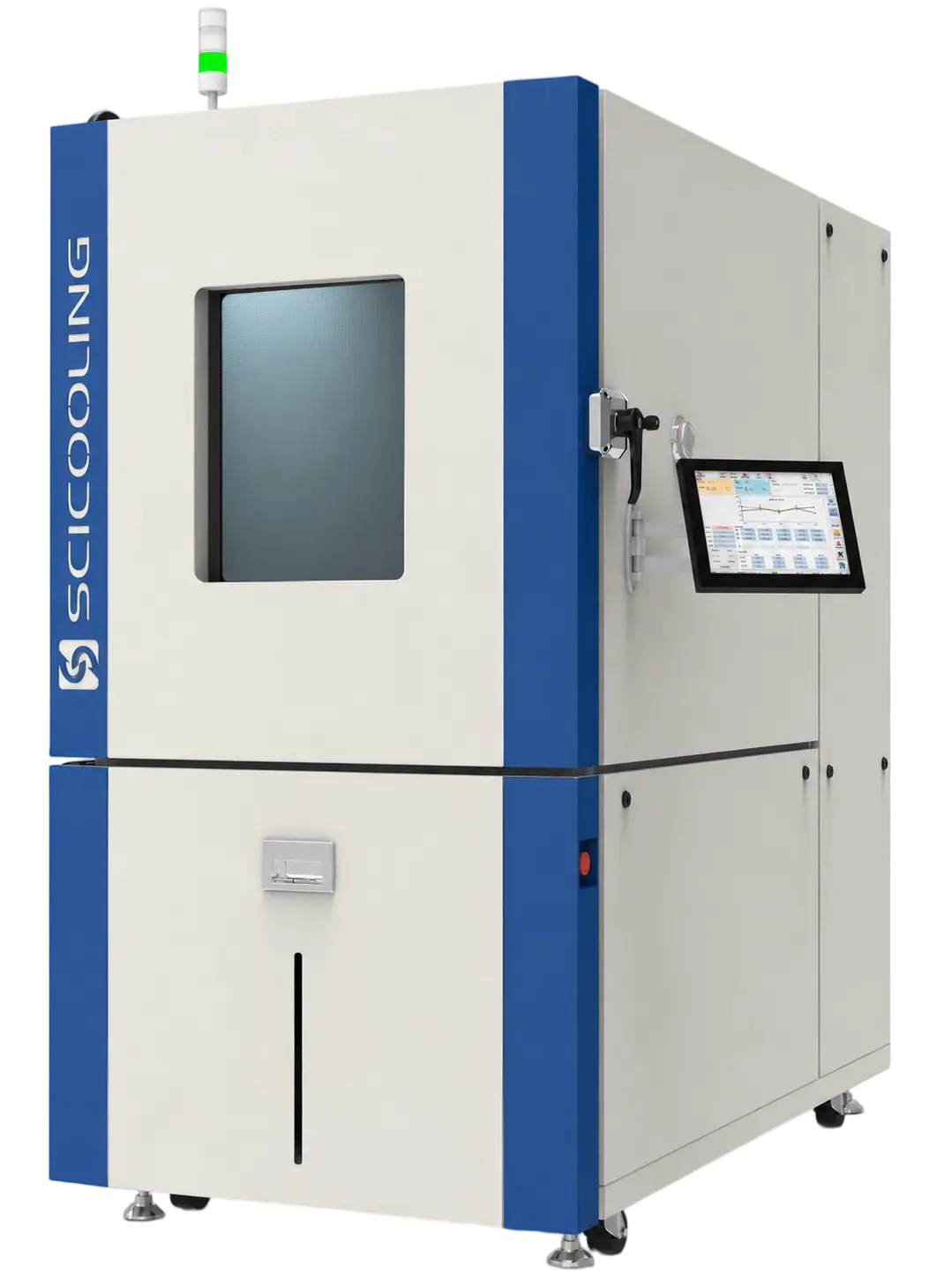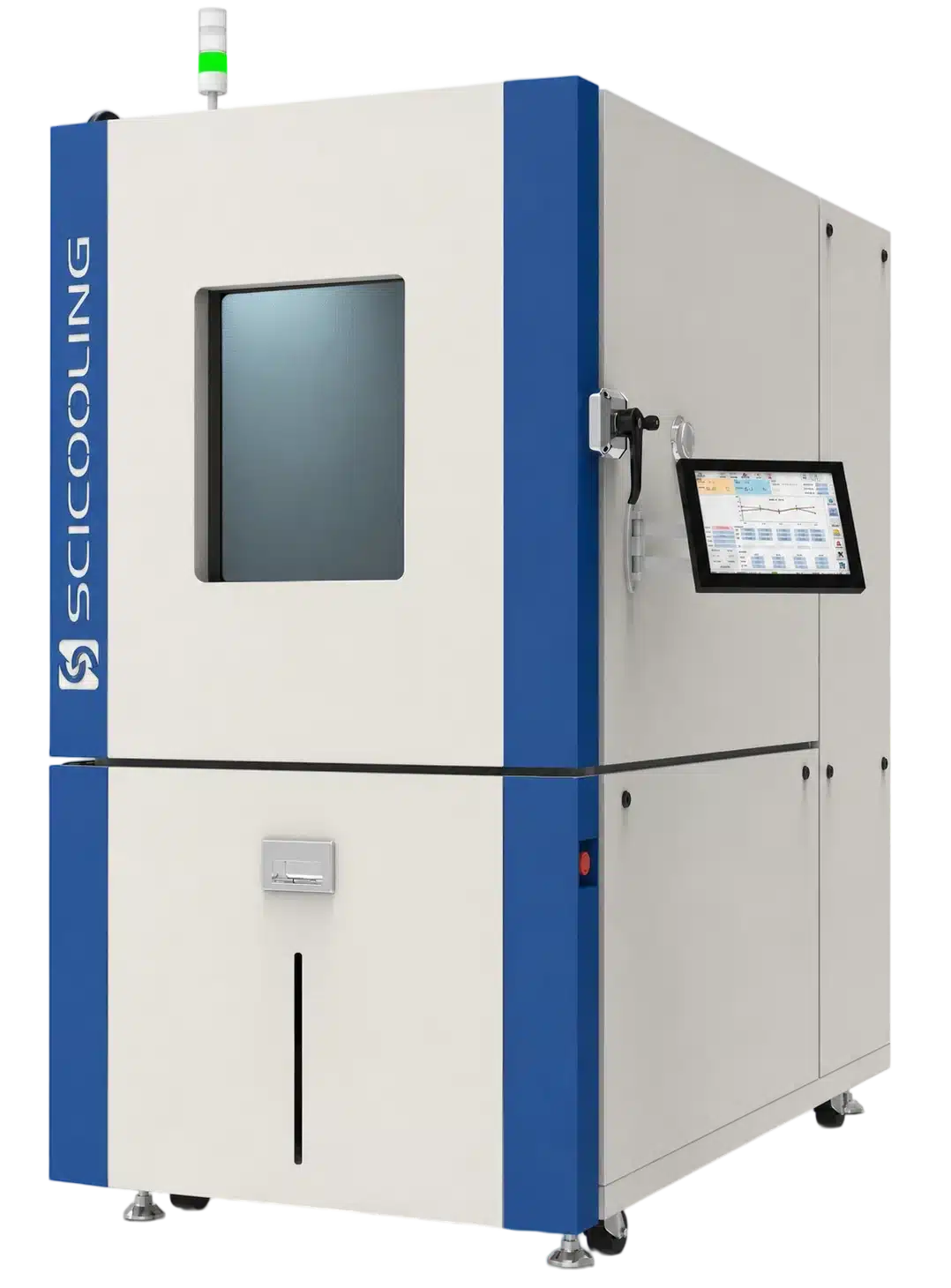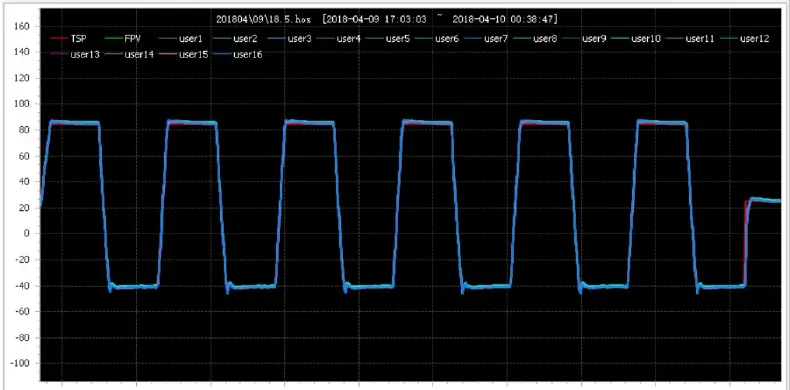
Repeated +85°C to −40°C cycling
The source record shows repeated hot and cold plateaus with close setpoint-to-measured tracking.
Compare 5, 10, 15 and 20°C/min platforms from 150 L to 1,000 L, screen specimen fit, and review original cycling records before requesting the final configuration.

Choose the required linear ramp-rate class first, then select the workspace volume. Review only the core selection fields here; detailed utilities remain in the comparison table and approved technical specification.

A balanced 15°C/min platform for accelerated reliability cycling with a practical 408 L workspace.
Use the model code, volume, operating range, ramp rate and workspace for the first selection. Detailed engineering configuration is confirmed through enquiry.
| Model | Volume | Temperature | Ramp rate | Workspace | Observation window | Positioning |
|---|
Source values are normalized from the supplied 5 / 10 / 15 / 20°C/min parameter tables. Confirm the specimen load, rate method, selected options and acceptance criteria through the approved quotation and technical specification.
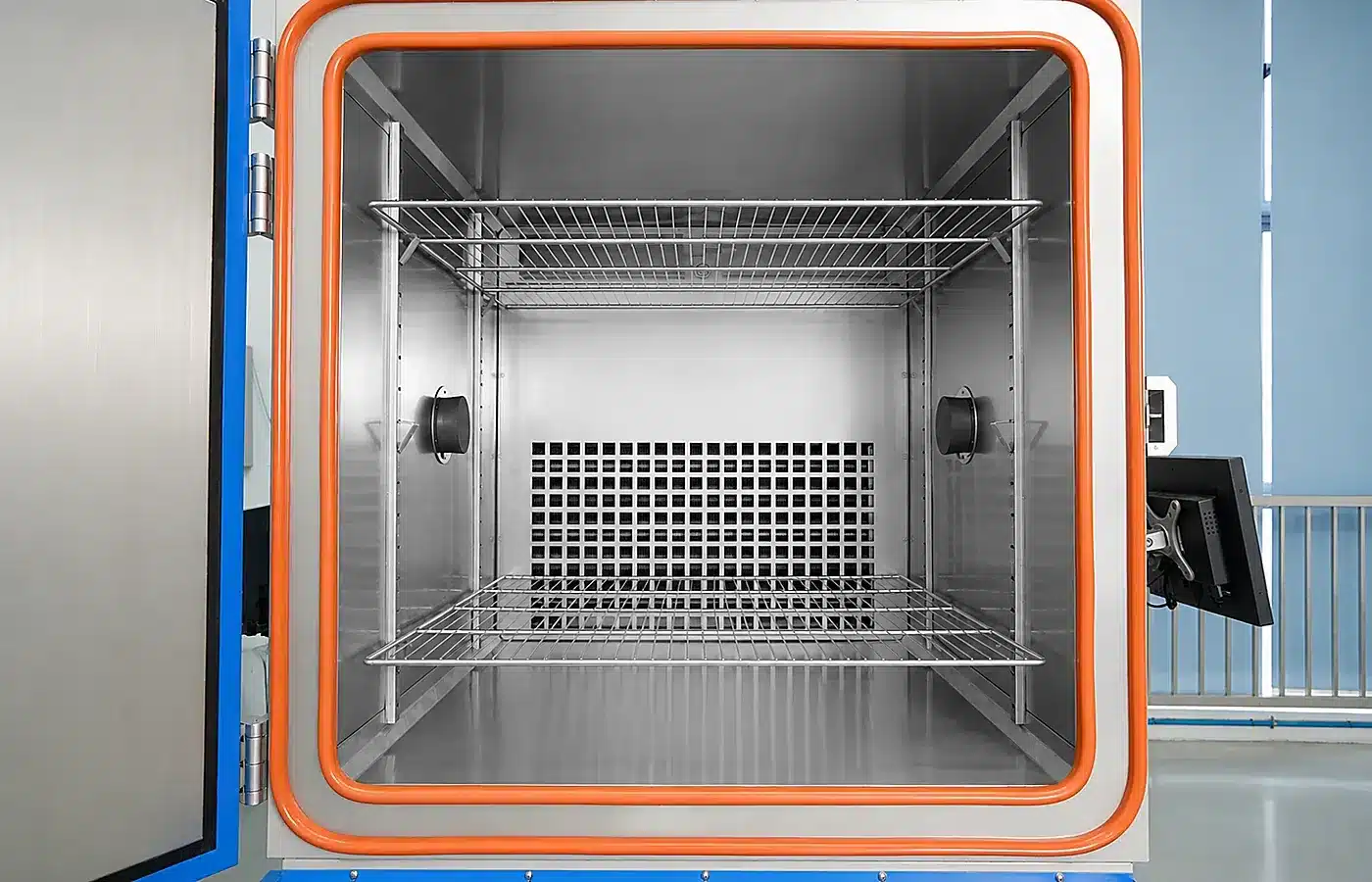
Explore the shared chamber platform, airflow path, refrigeration hardware, interfaces, protection devices and maintenance access through distinct real-equipment views.

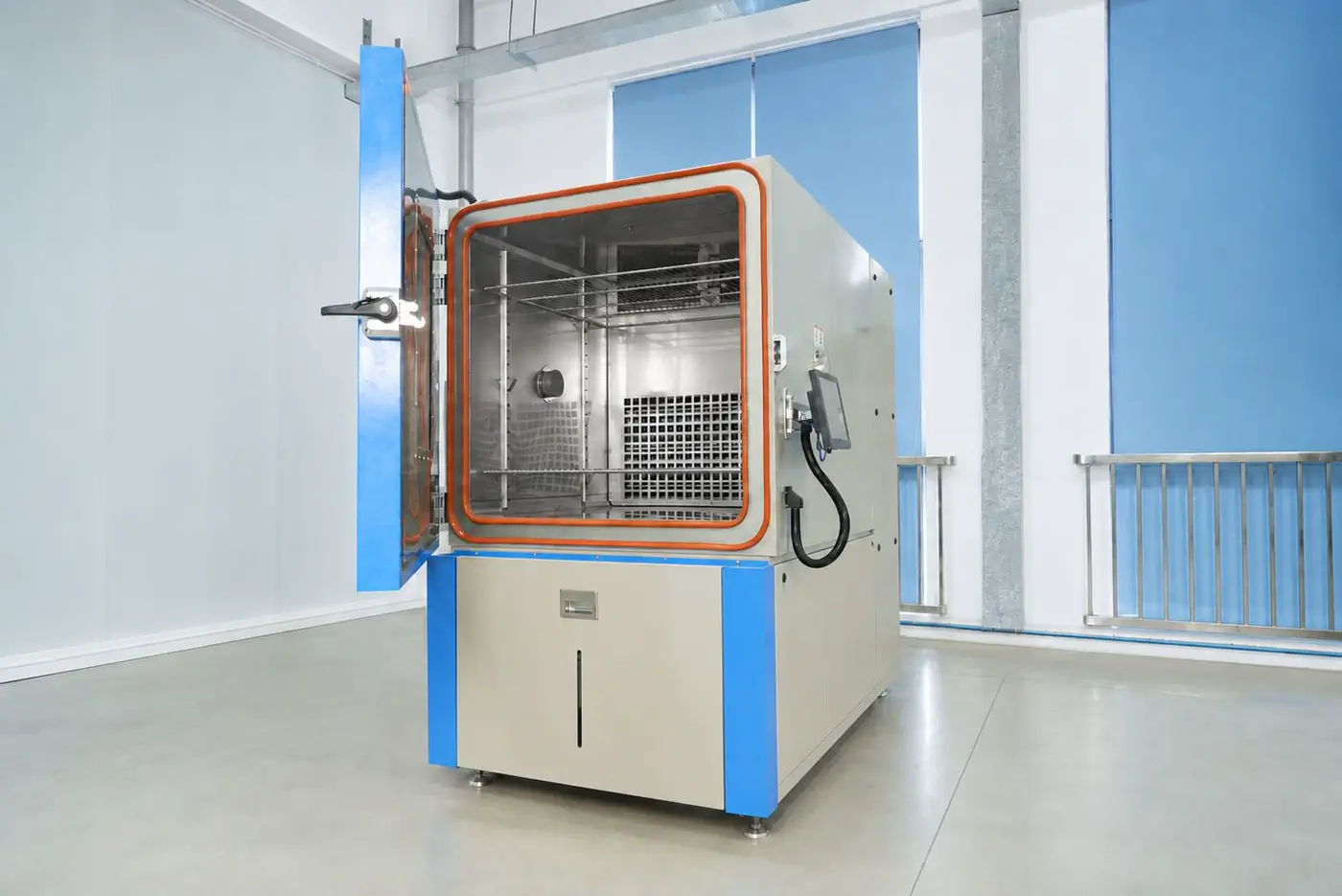
Stainless workspace, shelving and airflow path provide a direct view of the usable test environment.
Selection links ramp rate to workspace, specimen mass, heat output, airflow, refrigeration capacity and the stated measurement method.
Core family range from the supplied rate-class tables.
Choose the required linear change rate before choosing chamber volume.
The supplied curve library includes a 5°C/min loaded reference profile.
Original records show repeated hot-to-cold transitions instead of a single isolated ramp.
Review repeated 20°C/min cycling, a 1.2 m³ 15°C/min program, and a 100 kg / 4 kW loaded 5°C/min record. These are platform references; final acceptance follows the selected model and agreed test method.

The source record shows repeated hot and cold plateaus with close setpoint-to-measured tracking.
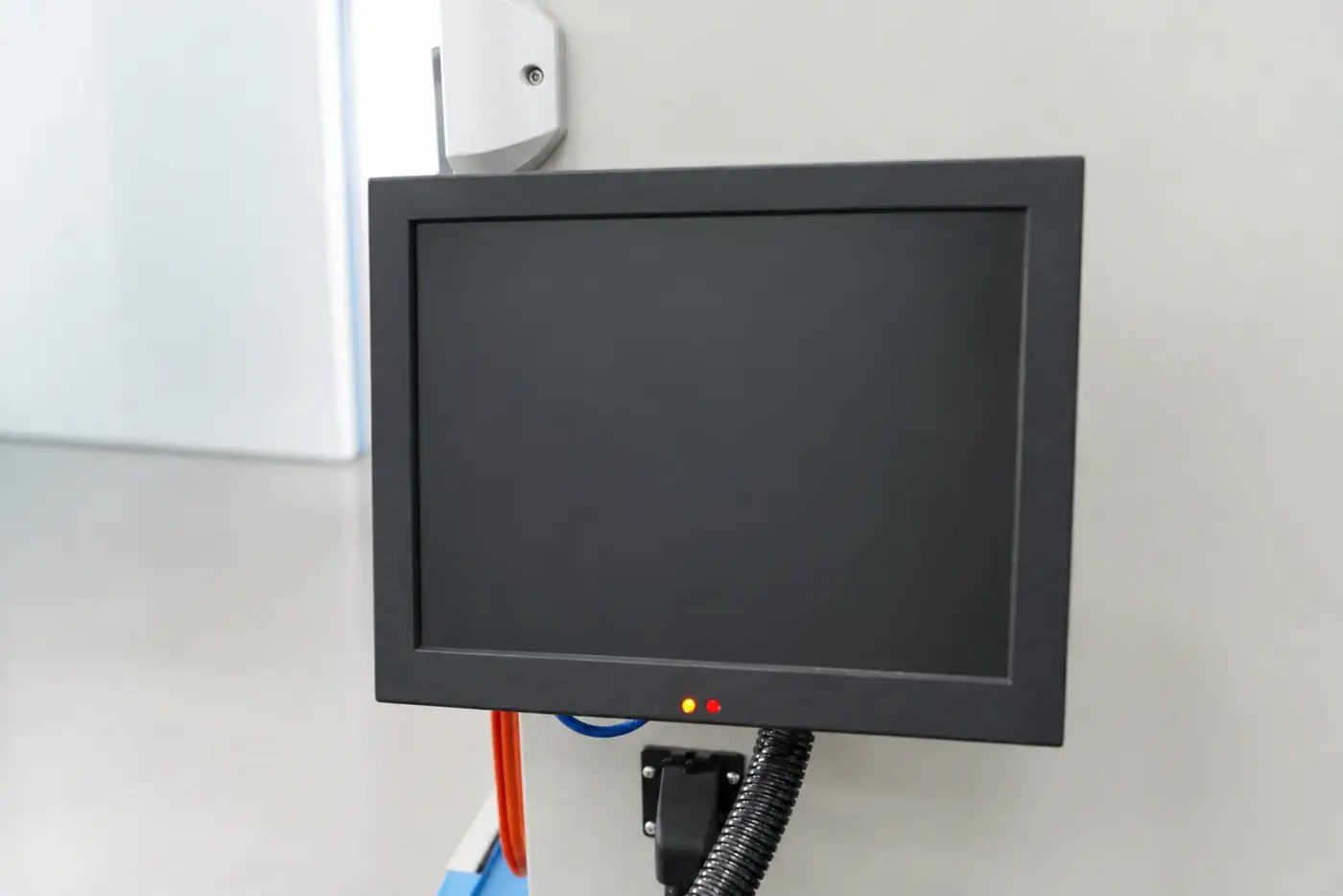
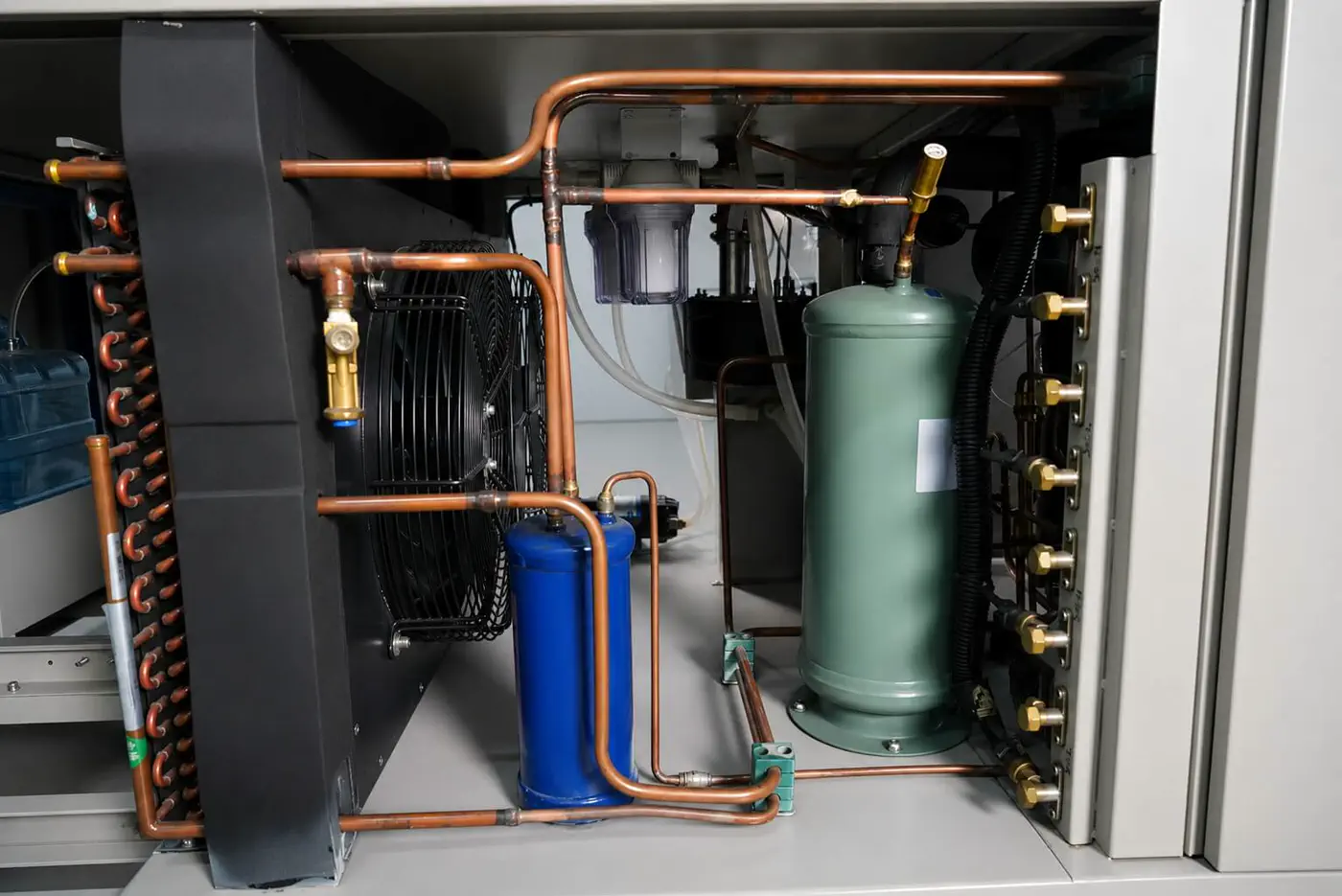
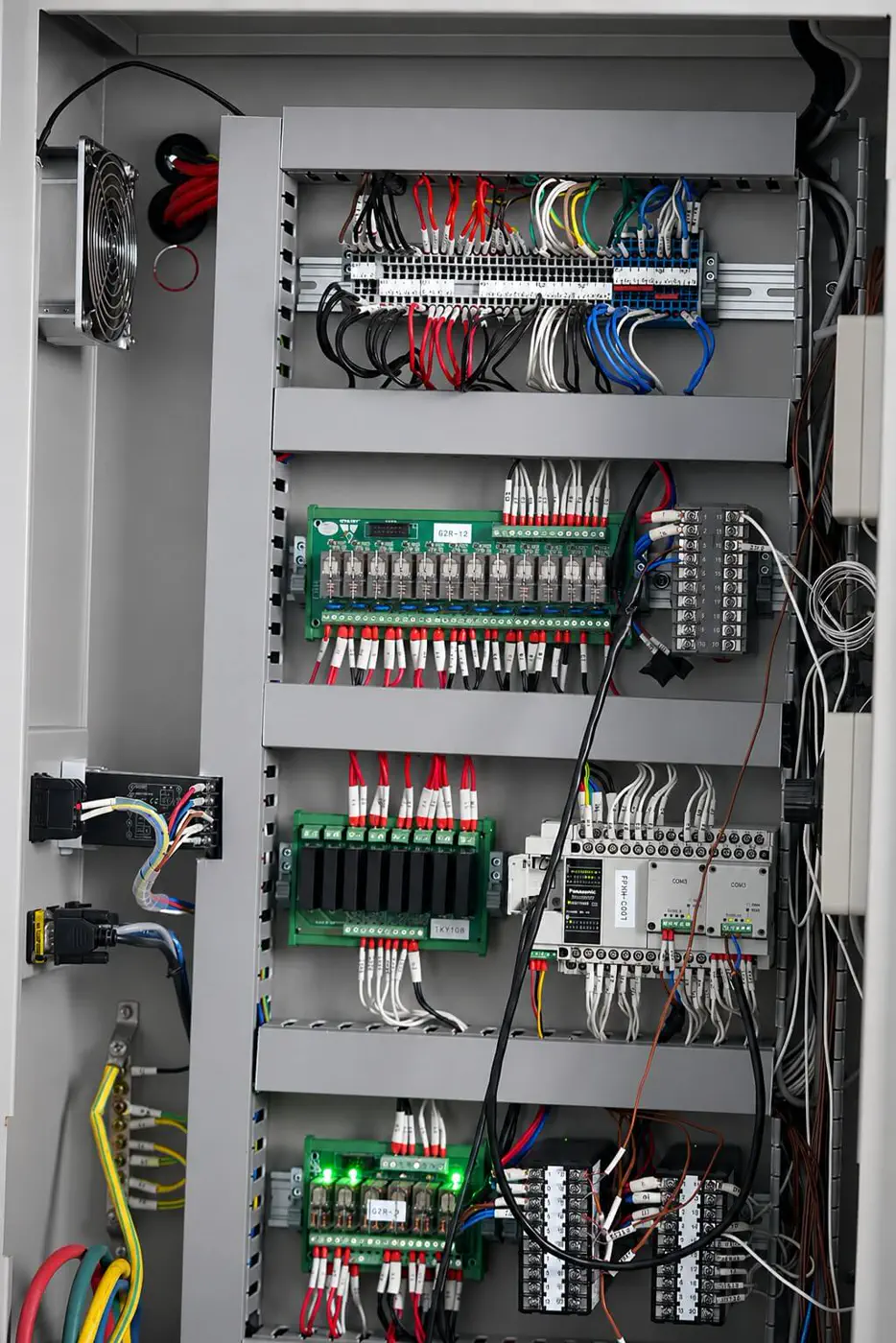
Each card uses a different real-equipment view: controller, remote record, electrical organization and refrigeration service access.

The dedicated controller view keeps the usability story grounded in the equipment actually delivered.
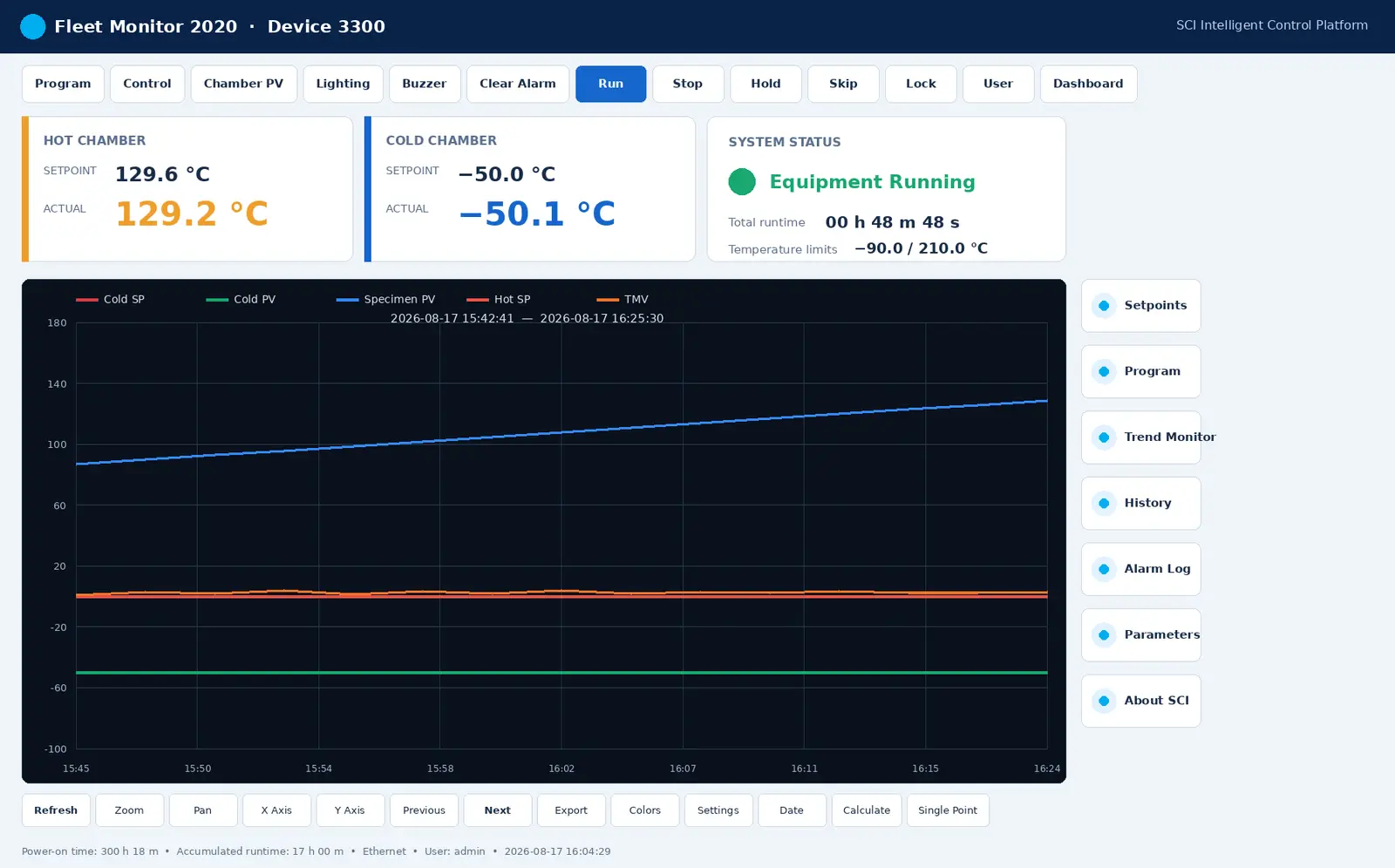
Connected configurations can share operating state, alarms and live SP/PV curves with technical support before deciding the next action.
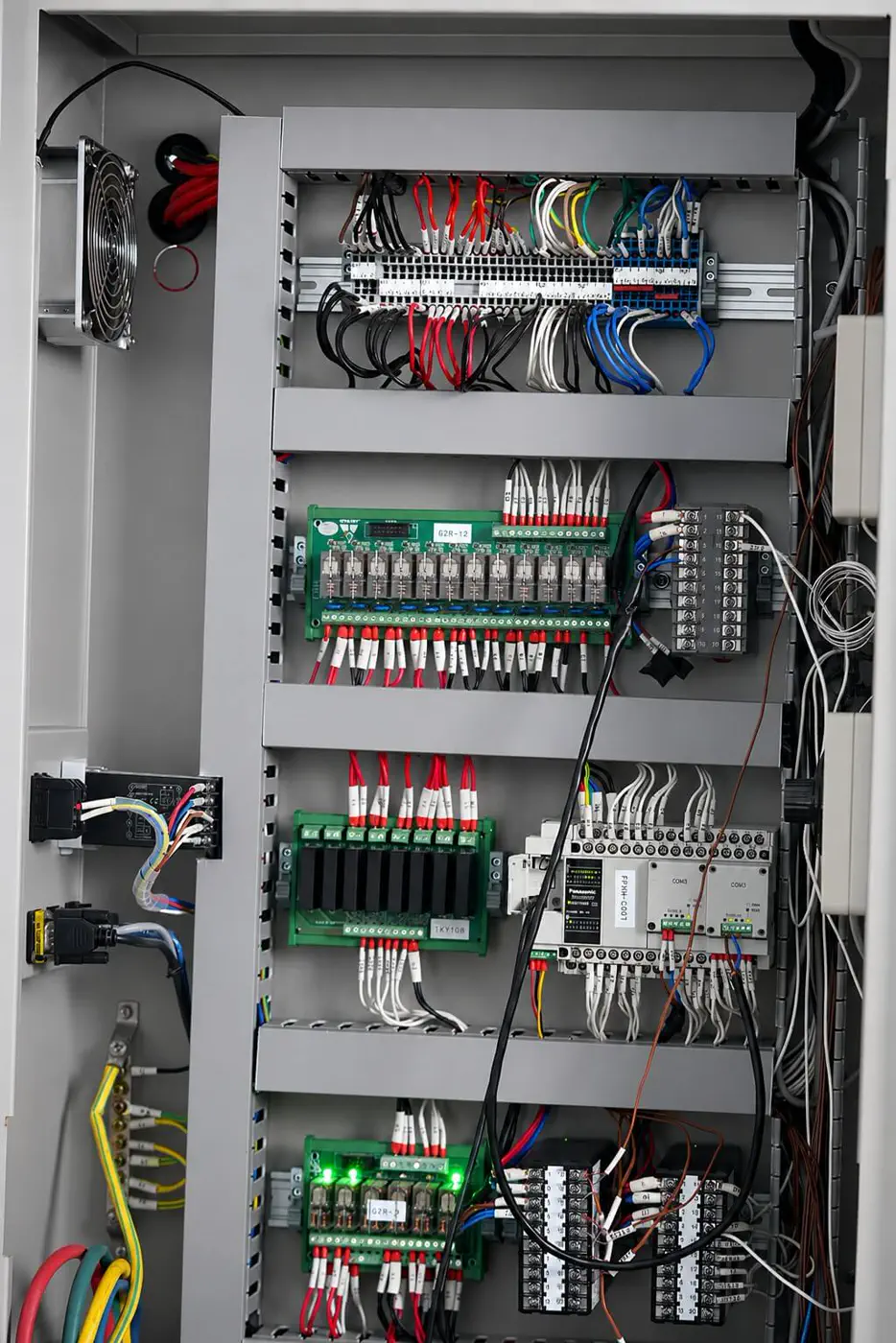
Terminal blocks, relays and control devices are grouped for inspection, identification and service access.
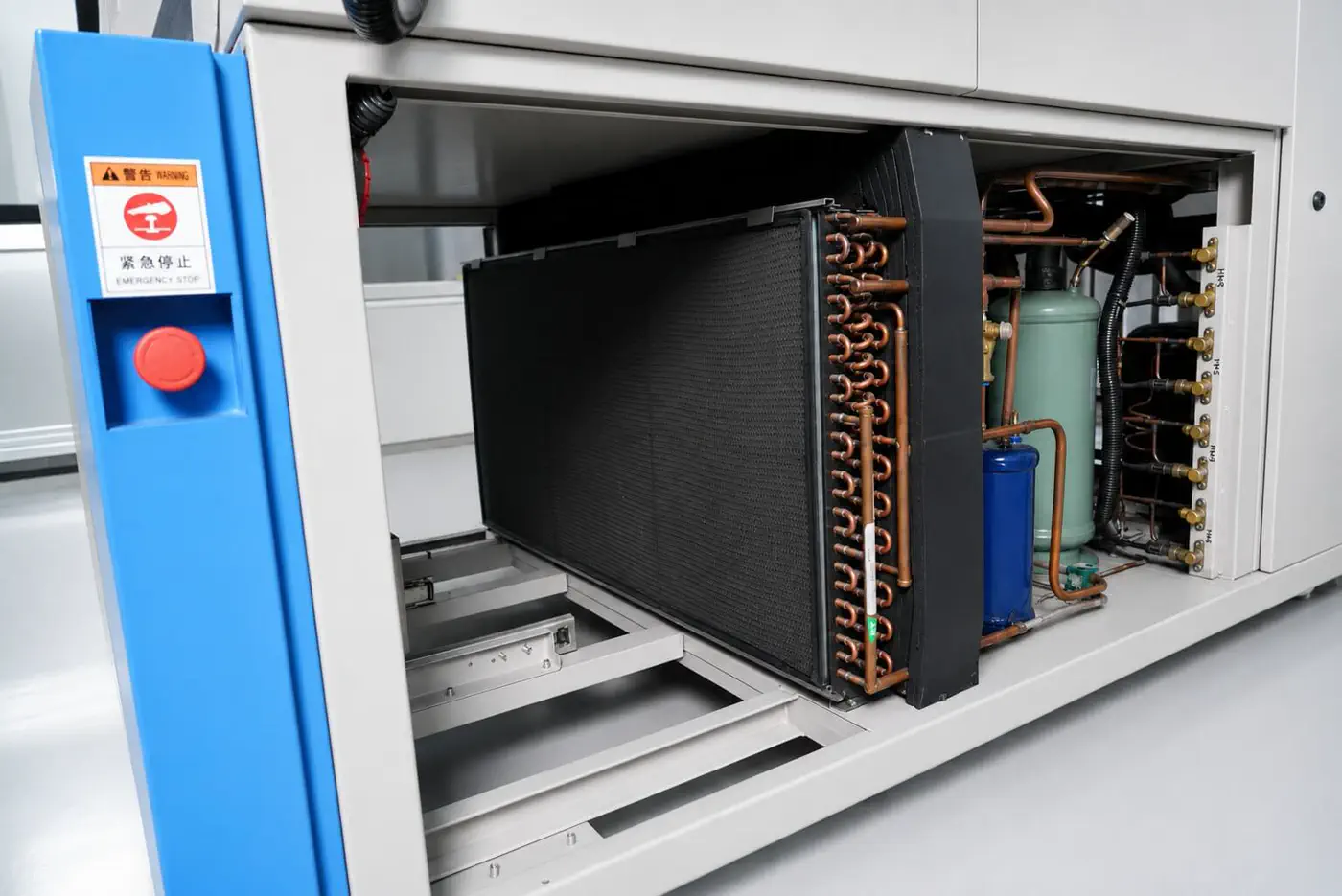
The open lower service bay shows heat-exchange hardware, copper piping and maintainable component access.
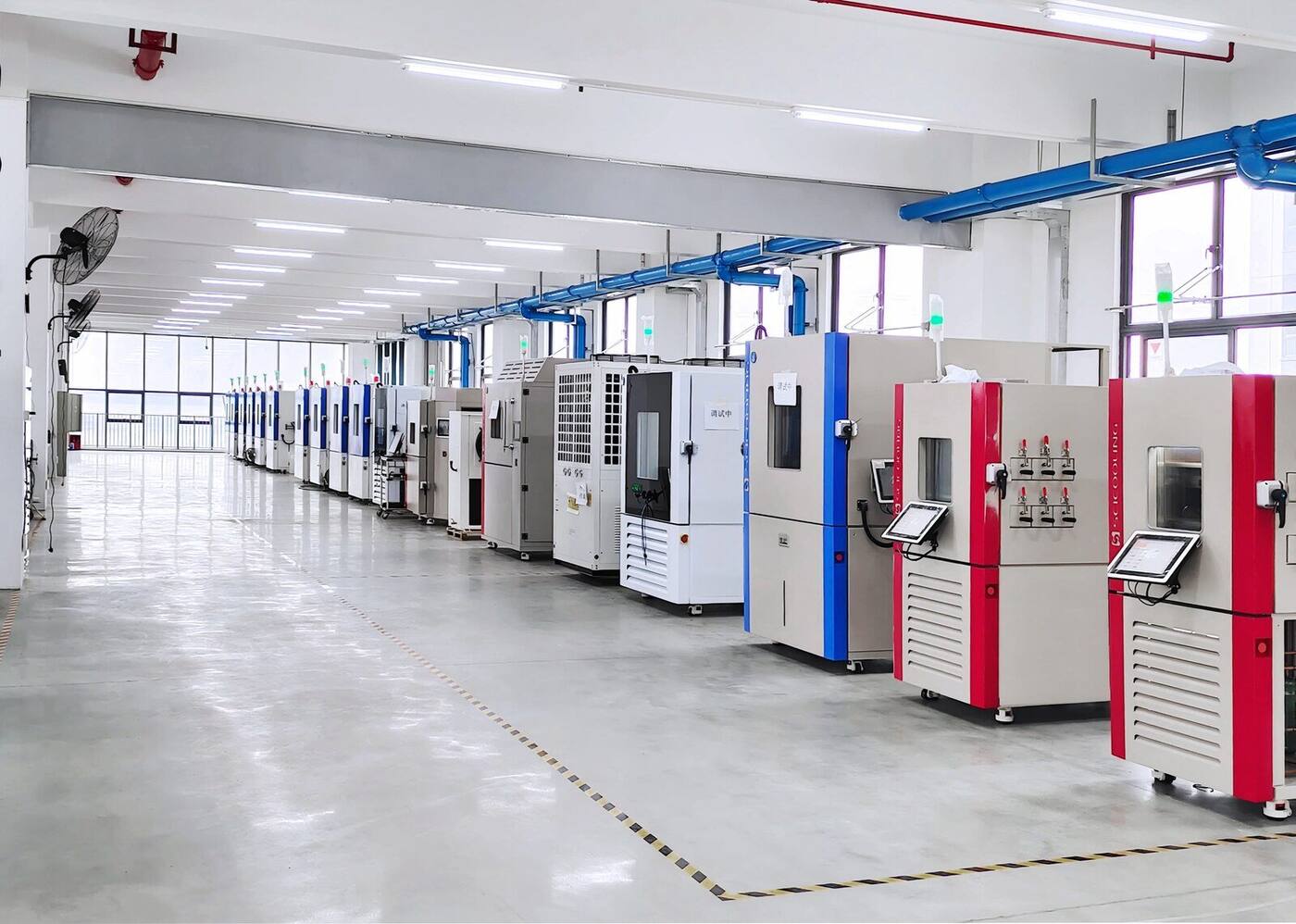
Real workshop context connects the digital configuration with assembled equipment, functional testing and release preparation. Model, options and acceptance requirements remain traceable through the engineering and quality process.
The supplied inspection workbook contains 223 recorded line items: 219 defined requirements plus four open issue-capture lines. The visual below preserves the four disciplines, severity logic and closed-loop release process.


Every process owner checks the work, the next process cross-checks the handoff, and final QA controls release. Identified issues are rectified and re-checked before sign-off.
Share the required temperature range, linear ramp rate, specimen dimensions, mass, heat output, dwell logic, utilities and acceptance method. The selected rate class and volume are carried into the request automatically.