

When performing thermal shock testing, why do some devices have stable data and high efficiency, while others fluctuate frequently and always have problems? In fact, the answer lies in three key parameters: recovery time, exposure time, and the number of consecutive shocks. They directly determine whether the test is accurate, whether the equipment is user-friendly, and whether the product passes the standard. Today, combined with the latest national standard documents, I will explain everything clearly at once.
- Recovery Time In the document “GB/T 10592-2023 Technical Conditions for Temperature Test Chamber,” there are two main points regarding recovery time: 3.16 definition of recovery time and 7.11 Testing steps and calculation.
- Definition of recovery time: After the specified exposure time, the time required for the workspace to transition from the current state to a low (or high-temperature) state, with the measurement point temperature returning to and beginning to stabilize within the allowable deviation of the exposure temperature. 2. Inspection steps and calculation: Further divided into two-box impact boxes (left and right or upper and lower baskets) and three-box impact boxes, with generally similar methods. Here, using the two-box impact box as an example: as shown in the figure below, the temperature shock range is Th~TL. The sample is first placed in a low-temperature chamber, reaching exposure temperature TL, then shocked to the high-temperature chamber and exposed at high temperature Th for 30 minutes; then shocked into the low-temperature chamber, where it was exposed to low-temperature TL for 30 minutes; Then the impact is sent to the high-temperature chamber, cycling in sequence.
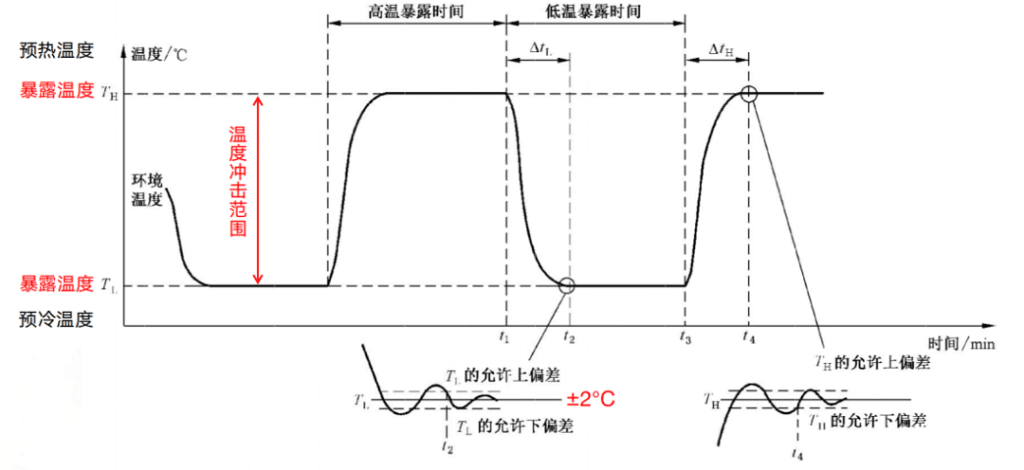
(Calculation formula: low-temperature recovery time = t2 – t1, high-temperature recovery time = t4 – t3) As shown in the figure above, it is clear that recovery time is “included” in the exposure time. Currently, the typical exposure time for high and low temperatures is 30 minutes, with a recovery time of ≤ 5 minutes. That is, after the sample stabilizes in the low-temperature/high-temperature chamber, the testing time is about 25 minutes. For example, if a certain thermal shock test chamber has an impact range of -65°C~+150°C and a temperature deviation of ≤±2.0°C, then when the temperature reaches -63°C from the high-temperature chamber to the low-temperature chamber, the low-temperature recovery time can be calculated.
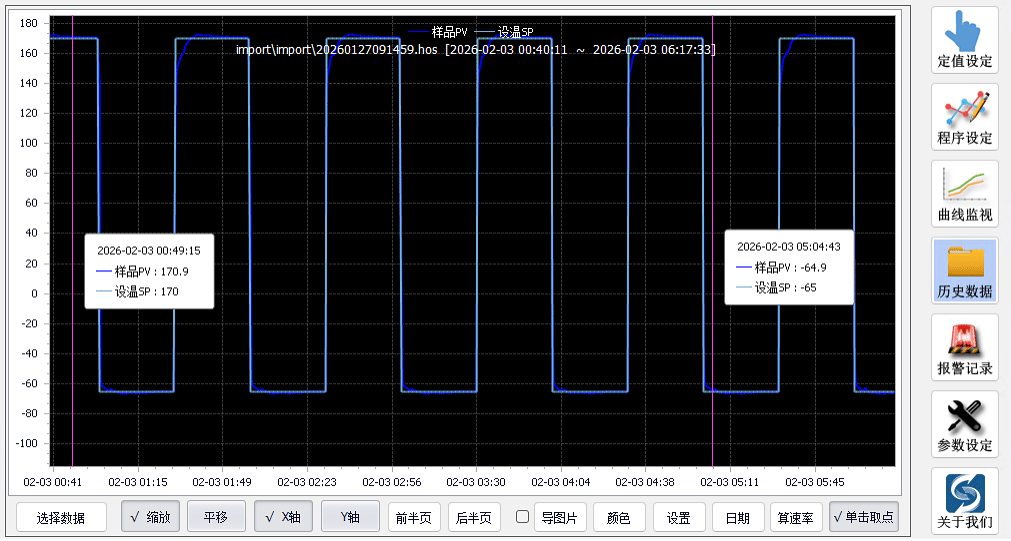
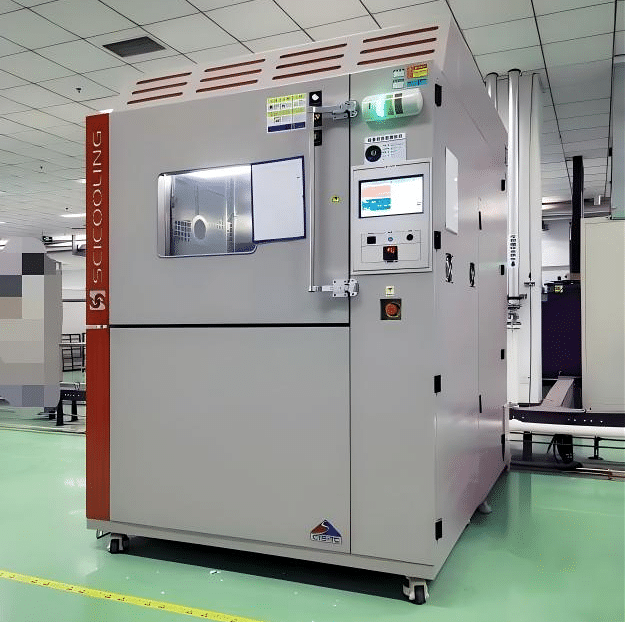
(SCICOOLING case of an upper and lower basket impact box, the client is a new energy vehicle company, impact range: -65°C~+170°C, recovery time 5 minutes) Generally speaking, high temperatures are easy to control, low temperatures are harder to control. The recovery time for high temperatures is about 3-4 minutes, while recovery time for low temperatures is close to 5 minutes. The shorter the recovery time, the faster the temperature control of the impact box, the better its sealing, and the superior its insulation structure. Different test standards also have different exposure times; for example, some high-reliability thermal shock chambers require a recovery time of 3 minutes, and such test chambers are more expensive.
- Exposure time
Exposure time is easy to understand: it starts when the test sample enters the new environment and ends when the sample leaves, so exposure time does not include basket transfer time (two-box impact box) and damper switching time (three-box impact box).
The longer the exposure time, the more heat and cold can be stored in the high-temperature or low-temperature chamber, which helps quickly restore temperature during the next shock. Conversely, the shorter the exposure time, the stronger the equipment’s ability to store cold or heat in a short time, which places higher demands on the equipment. For example, some non-standard high-reliability thermal shock chambers require an exposure time of only 15 minutes, which is much more expensive than conventional boxes exposed for 30 minutes.
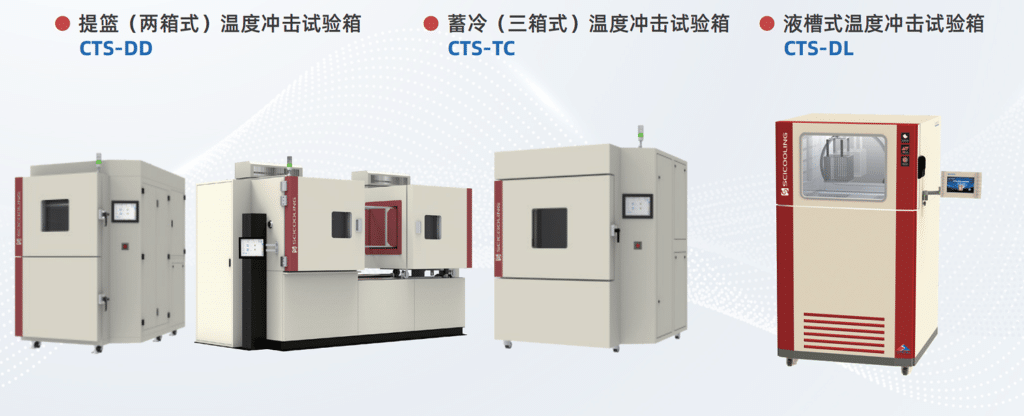
- Number of consecutive impacts (defrosting cycle, defrosting cycle)
After multiple consecutive impact tests in the temperature shock chamber, the evaporator and cold storage unit generally develop frost. Severe frosting affects equipment performance, so defrosting is performed after a certain number of shocks. The number of consecutive shocks (each time refers to one impact cycle) is an important indicator for measuring the equipment’s continuous working capacity, and is sometimes called the defrosting cycle or defrosting cycle. An excellent temperature shock chamber supports long-term continuous impact and automatic intelligent defrosting, greatly improving the efficiency and stability of long-cycle testing.
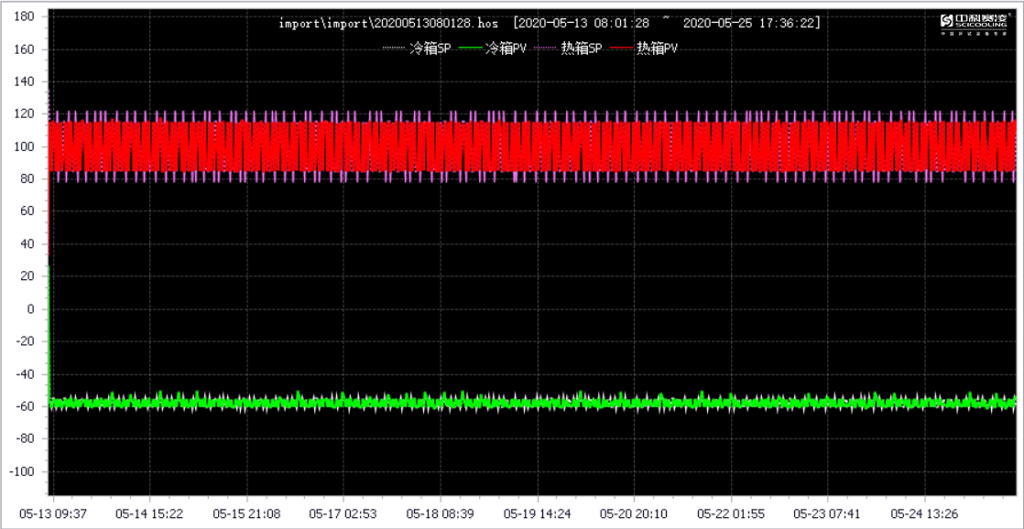
(SCICOOLING two-box basket impact box case, client is a large domestic third-party testing institution, continuous impact count ≥1000 times, rapid recovery time)
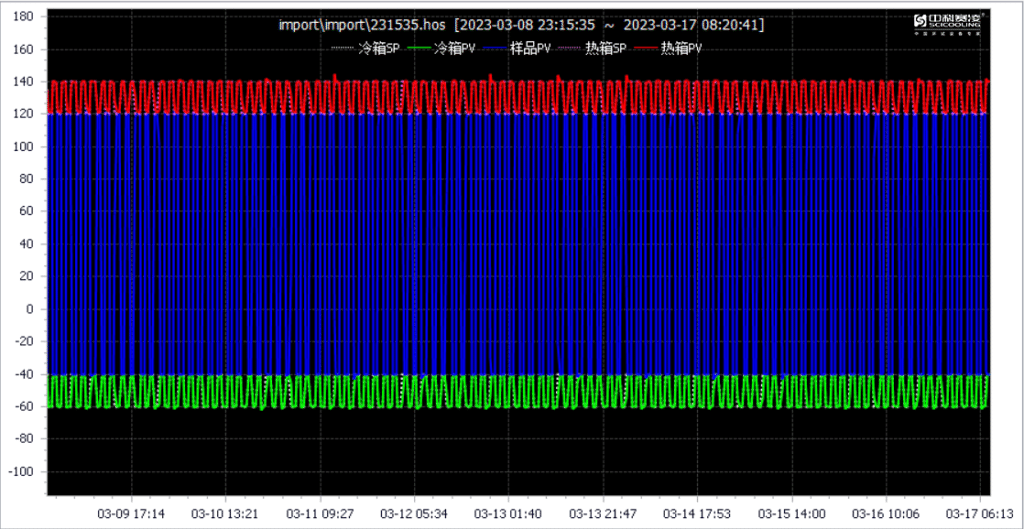
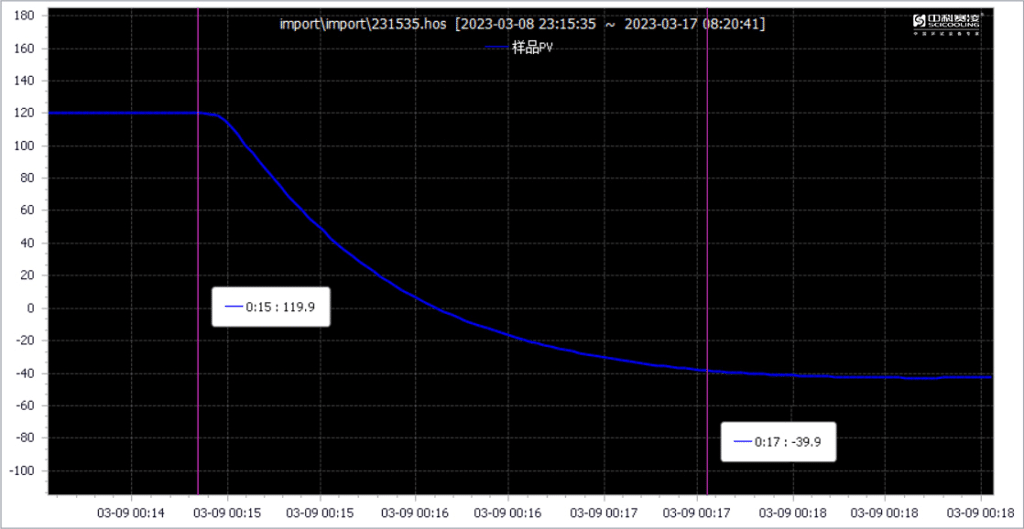
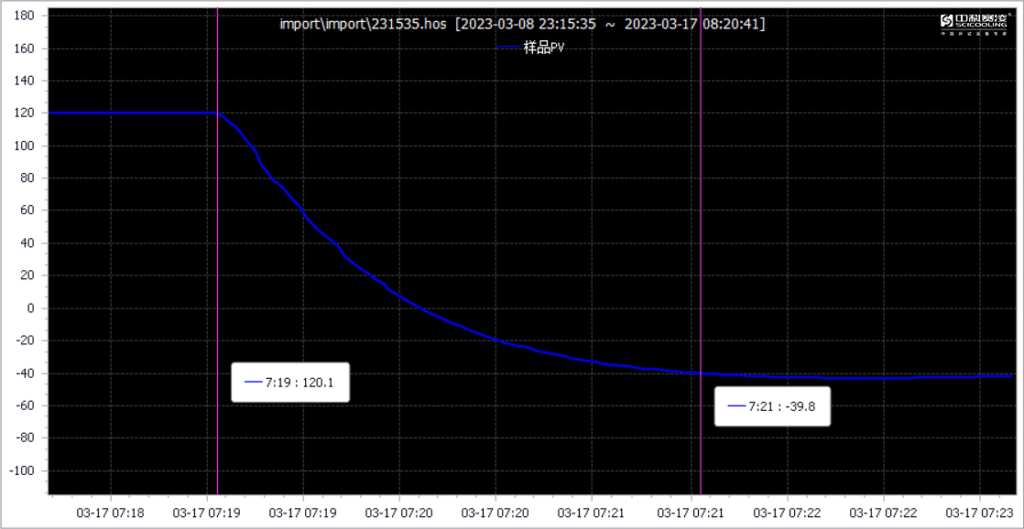
Conventional two-box impact boxes on the market require defrosting after dozens of consecutive impacts, while SCICOOLING’s two-box impact boxes typically operate continuously for over 200 cycles; With dry air flowing, the SCICOOLING two-box impact box can operate continuously for over 1,000 cycles. Conventional three-box impact boxes on the market require defrosting after 50 consecutive impacts, while SCICOOLING’s three-box impact boxes typically operate continuously for more than 100 cycles. (SCICOOLING three-box cooling shock box case: the client is a large domestic electronic communications company, with an impact range of -40°C~+120°C, exposure to high and low temperatures for 1 hour each, 100 consecutive shock cycles, no performance degradation, recovery time for the first shock is 2 min 20 s, and for the 100th shock recovery time is still 2 min 20 s).
To learn more about environmental test equipment expertise and product solutions, follow SCICOOLING. We continuously provide you with practical content and technical support.
Related Resources & Next Step
Related pages: Thermal Shock Test Chambers | CTS-TC Three-Zone Chamber | Submit a Project Request
Need to evaluate a test profile or configure a chamber? Explore the relevant SCICOOLING solution and submit your project requirements.