


01 Automotive Industry: The First Pillar of the National Economy
In recent years, China’s automotive industry has remained booming. Not only has annual production and sales exceeded 30 million units, maintaining its position as the world’s largest auto market for 15 consecutive years, but it has also made a leap forward in the new energy sector, capturing 60% of global sales, with BYD surpassing Tesla to become the global annual sales champion of new energy vehicles. Meanwhile, internet companies like Xiaomi and JD.com have entered the market, and Chery has fulfilled its 20-year dream of going public… Industry vitality continues to burst forth. Driven by both policy and market forces, China’s automotive industry has become the primary pillar of the national economy, not only driving the upgrade of the entire industry chain domestically but also demonstrating strong competitiveness in the global market, continuously driving technological iteration and market innovation.
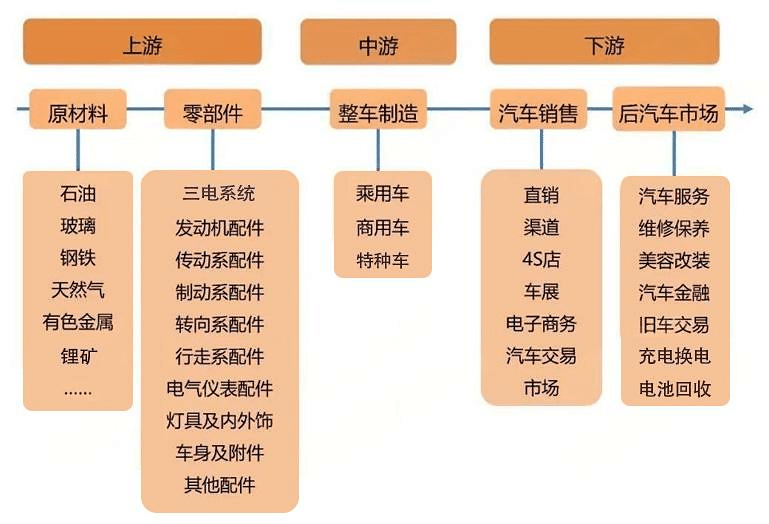
The automotive industry chain is mainly divided into three core parts: upstream parts supply, midstream vehicle manufacturing, and downstream sales and services, while also covering support systems such as design and R&D and circular recycling.
02 Environmental Reliability Testing: The Guardian of Automotive Quality A car requires about 10,000~20,000 parts. Throughout the entire lifecycle of a vehicle, the entire vehicle and its components face complex environmental challenges ranging from extreme cold to high temperature, and from dryness to high humidity. For example, the low temperatures of -40°C in northern winters, the high temperatures and humidity of 40°C in southern summers, and the humid environment during the rainy season.
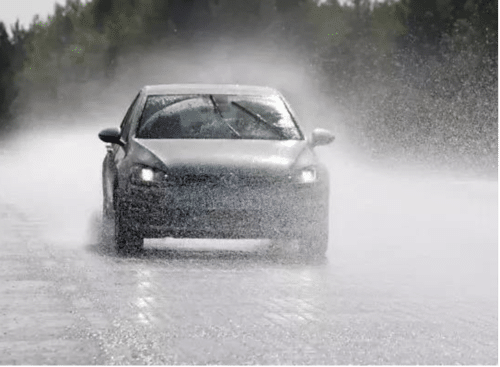
These environmental factors can easily lead to aging, deformation, performance degradation, or even failure of automotive parts, directly affecting driving safety and service life. Therefore, it is necessary to conduct environmental reliability tests on multiple aspects such as materials, components, and complete vehicles, including high and low temperatures, alternating wet heat, temperature shock, low air pressure, and comprehensive testing. Based on comprehensive consideration, some car brands have even combined national standards to establish strict corporate testing standards, becoming industry trendsetters.
03 SCICOOLING: A Reliable Partner for Automotive Testing SCICOOLING originated from the pilot workshop of the Institute of Physics and Chemistry, Chinese Academy of Sciences, and has focused on the research and manufacturing of environmental test equipment for over 20 years. Its main products include high and low temperature (damp heat) test chambers, temperature shock chambers, turntable support/vibration isolation platform test chambers, low-pressure boxes, three-integrated boxes, walk-in (automotive environmental chamber) boxes, ultra-low temperature equipment, and more. It is widely used in industries such as automotive transportation, aerospace, high-reliability equipment, electronic information, and new energy.
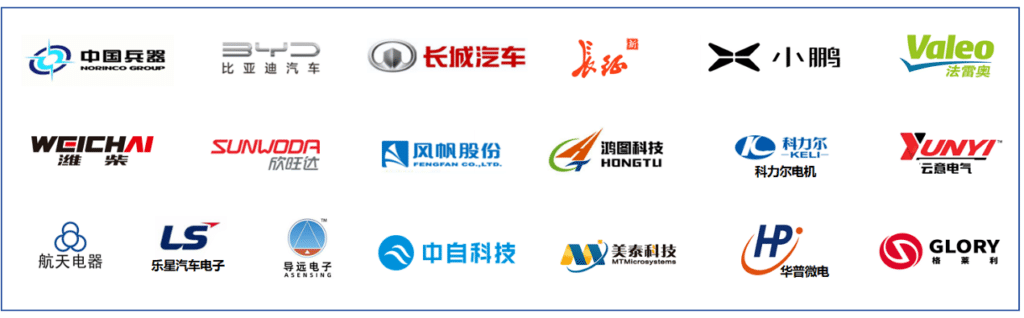
In the automotive industry, SCICOOLING also provides comprehensive testing services and application solutions to numerous vehicle manufacturers and component suppliers. To date, representative companies cooperating with SCICOOLING include: BYD (global new energy vehicle sales champion), Great Wall Motors (listed SUV national flagship car), XPeng Motors (new car giant), Weichai Power (global No. 1 seller of heavy-duty engines and transmissions), CSSC Sail (automotive starter batteries, Leading battery companies), Ningbo Siwell (a listed company in domestic automotive interior and exterior parts), Daoyuan Electronics (China’s leading company in high-precision MEMS intelligent driving positioning systems), South Korea’s Lexing Automotive Electronics (a globally renowned supplier of automotive switches and relays), and France’s Valeo (a global automotive parts giant), among others.
04 Zhongkesai & Typical Automotive Industry Cases The following shares some cases of SCICOOLING’s environmental reliability test chamber in the automotive industry:
- Large automotive environmental warehouse 1152m³ – Hebei
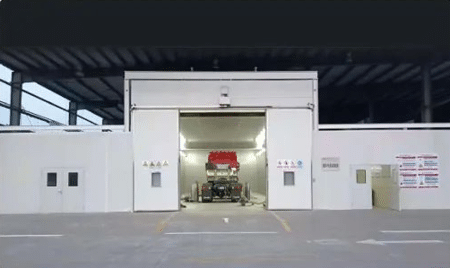
Ø Equipment Purpose: Environmental simulation tests for heavy-duty trucks
Ø Main Technical Parameters:
Temperature range: -40°C~+60°C Humidity range: 10%~98% RH Inner chamber size: W8mxD24mxH6m Heating rate: ≥1.0°C/min Cooling rate: ≥0.5°C/min
- Walk-in high and low temperature and humidity test chamber – Shanghai
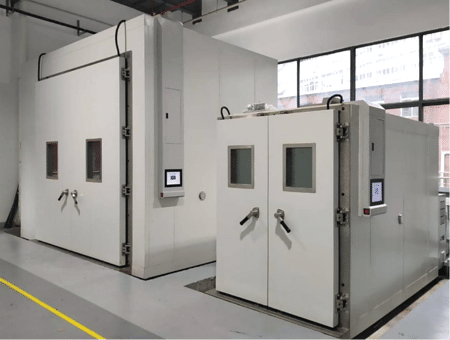
Ø Equipment Purpose: Used for testing automotive parts and systems
Ø Main Technical Parameters: Nominal volume: 28m³
Temperature range: -60°C~+100°C
Temperature change rate: ≥1.5°C/min (load 1000kg) Humidity range: 20%~98RH High temperature and high humidity function: 80°C/98% RH
- Three-axis turntable equipped with temperature test chamber – Guangzhou
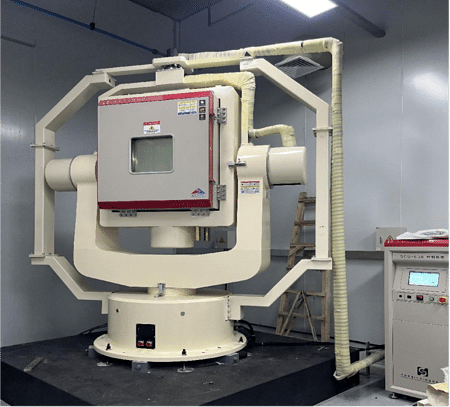
Ø Equipment Purpose: Used for testing navigation chips, electronic components, microwave power devices, etc.
Ø Main Technical Parameters:
test space volume: 350LL Temperature range: -55°C~+150°C Heating rate: ≥3°C/min Turntable manufacturer: Aviation 304 Office
- Ultra-low temperature shock chamber – Jiangsu
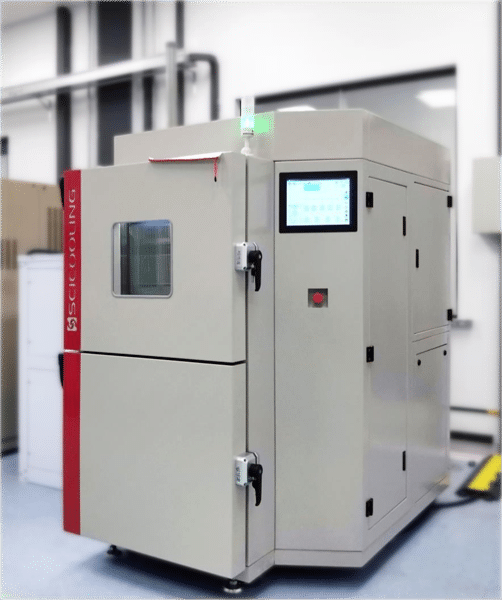
Ø Equipment Purpose: Used for impact testing of automotive parts.
Ø Main Technical Parameters:
test space volume: 120L; Temperature range: -80°C~+150°C; Impact range: -65°C~+150°C; Recovery time: ≤5 minutes
- High and Low Temperature and Humidity Test Chamber – Shandong
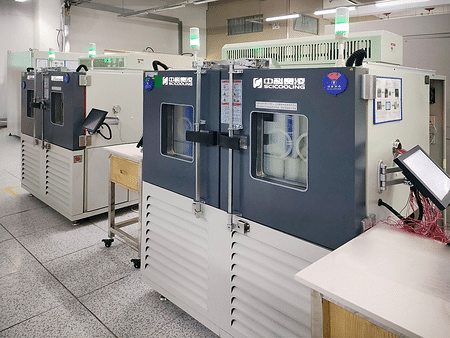
Ø Equipment Purpose: Testing of automotive electronic components and relay lamp products.
Ø Main Technical Parameters:
Nominal Volume: Dual Chamber (150L*2)
Temperature range: -70°C~+150°C
Temperature variation rate: ≥2°C/min Humidity range: 10%~98% RH
Related Resources & Next Step
Explore SCI’s automotive and mobility testing solutions, compare high and low temperature test chambers, or submit your automotive test requirements.
Need to evaluate a test profile or configure a chamber? Explore the relevant SCICOOLING solution and submit your project requirements.