
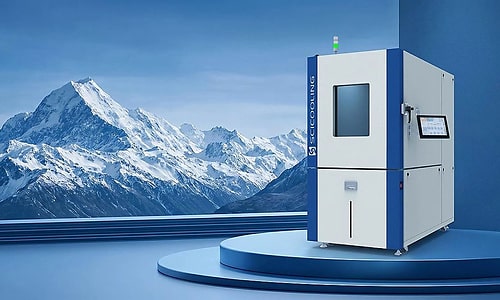
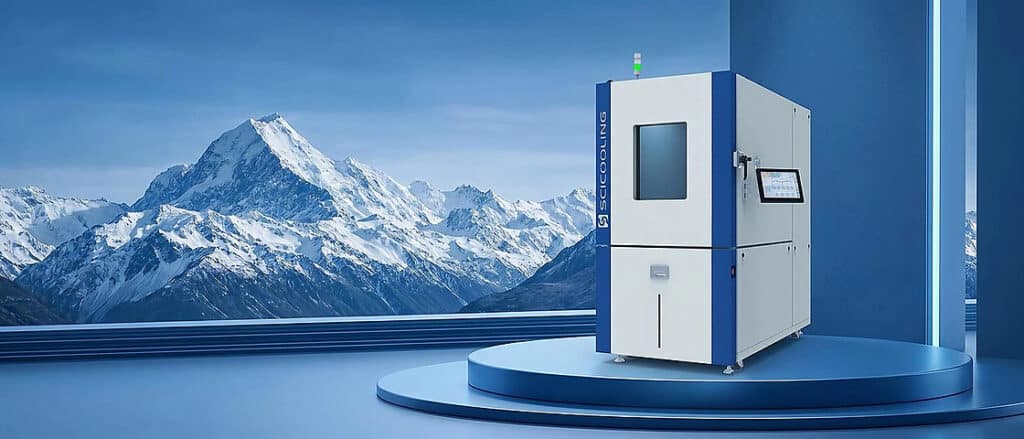
7°C/7%RH│SCICOOLING temperature and humidity test chamber Easily solves low temperature and humidity challenges

Low temperature and low humidity: a rigid requirement for testing high-end products
In environmental reliability testing, “low temperature + ultra-low humidity” is widely recognized as a tough challenge. Many aerospace and high-reliability components, precision electronics and optical devices, chips, and special materials must simulate extreme natural conditions such as plateau dry cold and polar low temperatures. Among these, low-temperature and ultra-low humidity environments of 7°C/7%RH and 10°C/5%RH are core conditions for testing product resistance to drying aging, anti-static, and low-temperature operation stability. The temperature isn’t extreme, but once humidity drops to single digits, residual moisture in the air is close to “trace level,” putting the cabinet’s sealing, dehumidification, and humidity control capabilities to the limit.
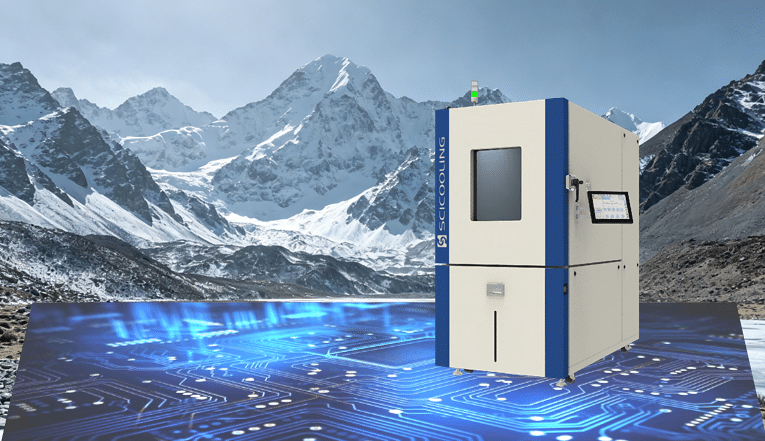
Industry bottleneck: conventional equipment struggles to break through low temperature and humidity
The conventional high and low temperature and humidity test chambers on the market usually have a temperature and humidity range of 20%~98% RH (+20°C~+90°C), with a better configuration being 10%~98% RH (+10°C~+90°C). But below 10°C, aiming for 5%~7RH is almost entirely a failure for conventional models.
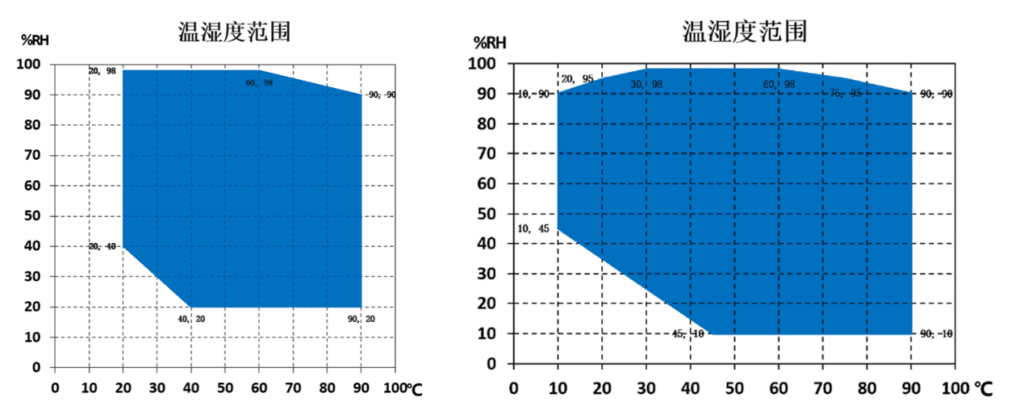
20%~98%RH(+20℃~+90℃) 10%~98%RH(+10℃~+90℃)
There are two main reasons: at low temperatures, the saturated water vapor partial pressure of the air is extremely low, so even if the enclosure seeps in with only a slight amount of moisture (door sealing, wiring introduction, load moisture release), the relative humidity will quickly rebound. At the same time, issues such as the evaporator prone to frosting and the mutual antagonism between temperature and humidity control further limit the realization of ultra-low humidity conditions. A common industry solution is to add additional devices such as rotary dehumidification or nitrogen purging. However, rotary dehumidification equipment is expensive to procure and complex to install, requiring a regeneration temperature of 120°C~150°C, which significantly increases energy consumption; Nitrogen purging requires additional air sources, and operating costs continue to rise.
SCICOOLING low-temperature and low-humidity control technology
To address these industry pain points, SCICOOLING relies on its self-developed control algorithms to establish a temperature and humidity system model, achieving independent control over the four major systems: cooling, heating, dehumidification, and humidification, fundamentally solving the problems of temperature and humidity interference and operating fluctuation drift. Without adding runners, nitrogen, or any additional dehumidification devices, the test chamber can stably achieve low temperature and humidity at 7°C and 7% RH, with performance comparable to top international brands in the industry.
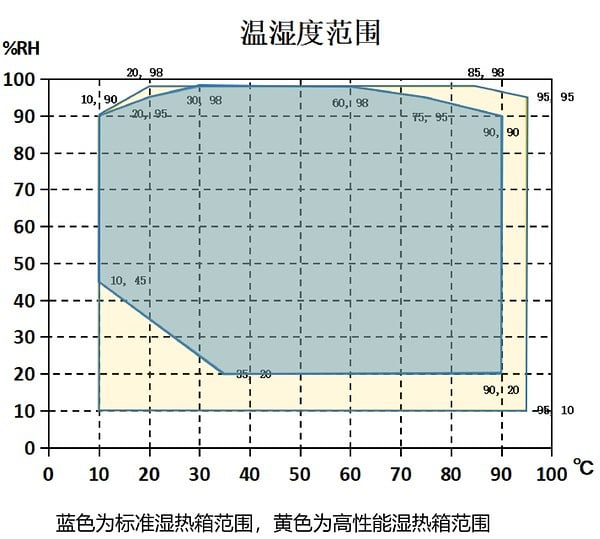
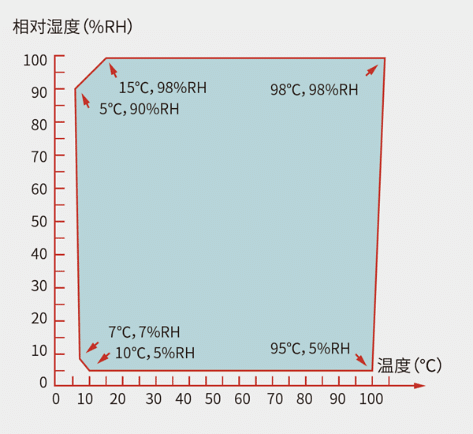
As shown above, SCICOOLING’s conventional temperature and humidity test chamber can achieve 20%~98% RH (+10°C~+90°C), including the common dual 85 operating conditions (85°C/85%RH); High-performance temperature and humidity test chamber achieves 10%~98% RH (+10°C~+95°C), such as 10°C/10%RH; Special non-standard temperatures can reach 5%~98% RH (+5°C~+98°C), such as 7°C/7% RH. Moreover, this control technology can precisely match the output of compressors and refrigeration devices according to actual loads, ensuring the system “cools without heating, heating without cooling,” avoiding energy waste and control conflicts.
Cases of Stringent Multi-Industry Testing Scenarios: Currently, SCICOOLING’s high and low temperature and humidity test chambers are widely used in many fields such as high-reliability aerospace, precision semiconductor devices, new energy vehicle electronics, and high-end new materials. In multiple precision chip low-temperature drying and aging tests, polar environment simulation of automotive components, and high-reliability material weather resistance testing, the equipment can stably output under harsh conditions of 7°C/7%RH and 10°C/5%RH for extended periods without auxiliary dehumidification devices, with minimal temperature and humidity fluctuations. The repeatability and reliability of test data have been recognized and praised by many customers.
- High and Low Temperature and Humidity Test Chamber (Xi’an—a leading enterprise in the aerospace industry)
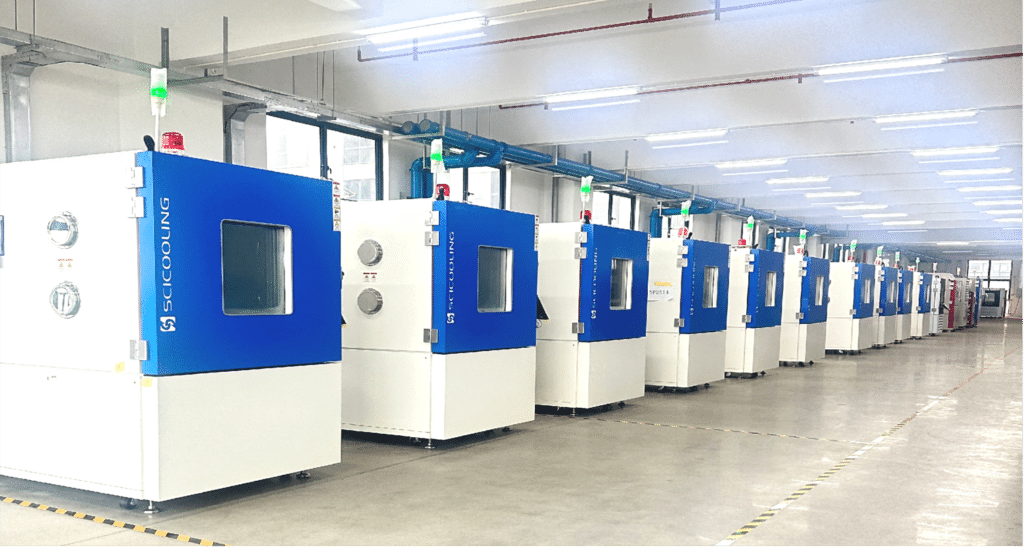
Main indicator: test space volume 1000L
Temperature range -75°C~+150°C
Heating rate≥3°C/min (under load)
Humidity range: 10%RH~98%RH (+10°C~+95°C)
- High and Low Temperature and Humidity Test Chamber (Sichuan – An Aerospace and high-reliability Industry Enterprise)
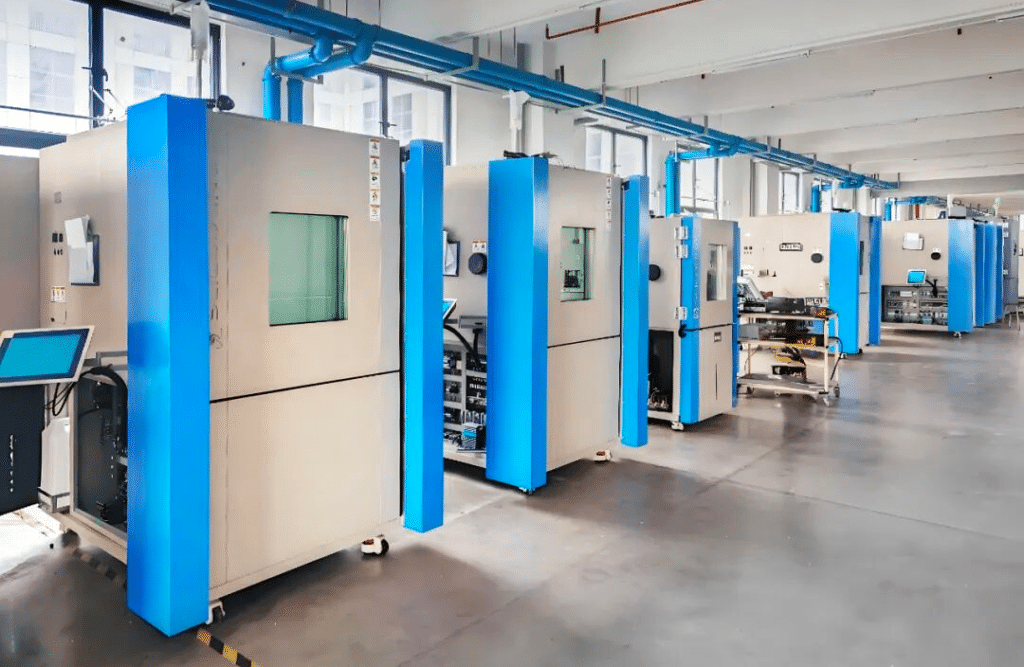
Main indicators: test space volume 300L~1000L
Temperature range -75°C~+150°C
Heating and Cooling Rate≥1~15°C/min (loaded, linear)
Humidity range: 5%~98% RH (+5°C~+98°C)
- High and Low Temperature and Humidity Test Chamber (Wuhan – Third-Party Testing high-reliability-Civil Fusion Test Laboratory for a Listed Company)
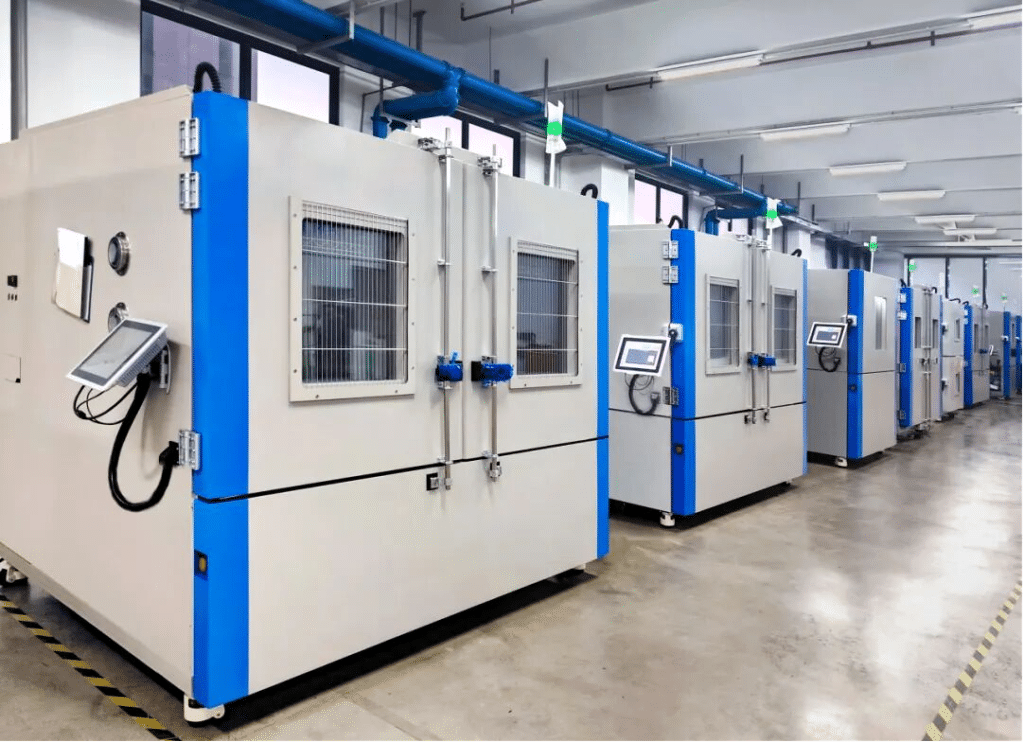
Main indicators: test space volume 500L~2000L
Temperature range -75°C~+150°C
Heating and Cooling Rate≥1~15°C/min (loaded, linear)
Humidity range: 10%~98% RH (+10°C~+95°C)
- High and Low Temperature and Humidity Test Chamber (Qingdao – a listed company in the automotive electronics industry)
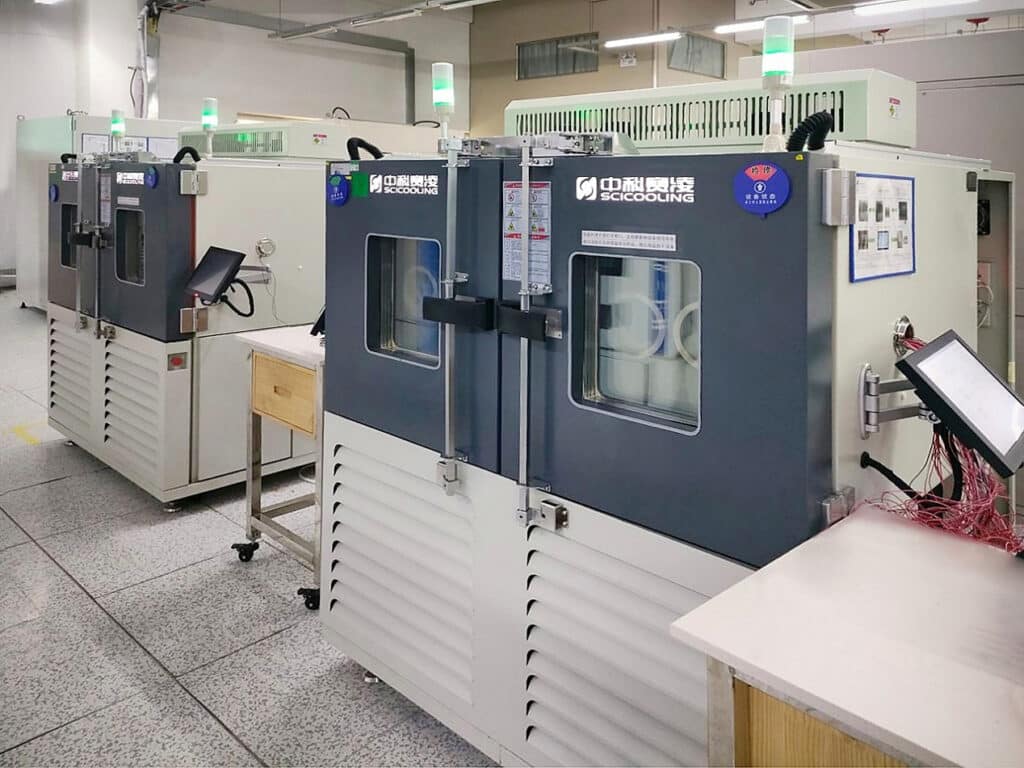
Main indicators: test space volume 300L~1000L
Temperature range -75°C~+150°C
Heating rate≥ 2°C/min (under load)
Humidity range: 10%~98% RH (+10°C~+95°C)
Related Resources & Next Step
Related pages: Temperature Humidity Test Chambers | Submit a Project Request
Need to evaluate a test profile or configure a chamber? Explore the relevant SCICOOLING solution and submit your project requirements.