
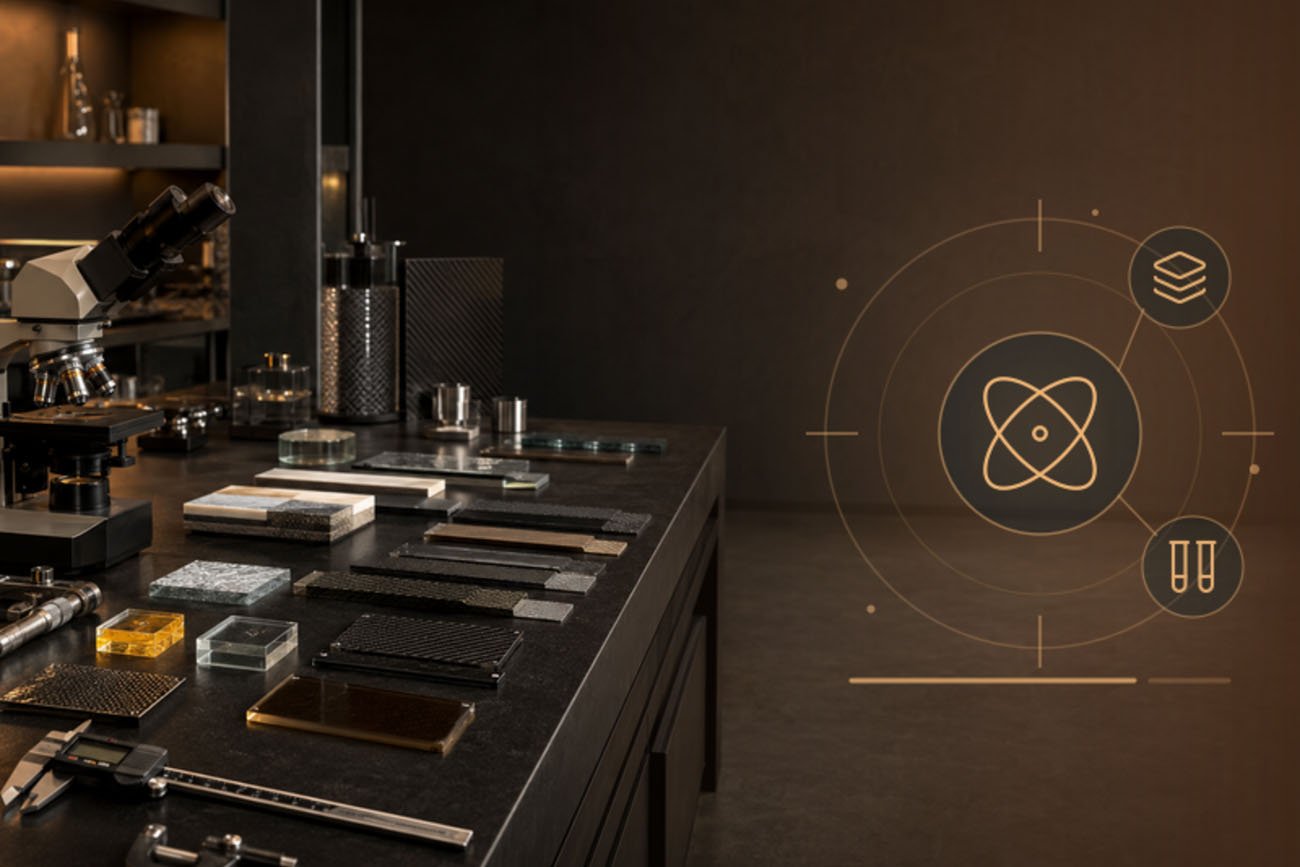
Polymers, composites and adhesives can change through heat, moisture, oxidation, plasticization and interfacial stress. Accelerated climate aging uses controlled temperature and humidity to reveal those changes within a practical laboratory schedule. The challenge is to accelerate the relevant mechanism without creating a new one that would not occur in service.
The exposure profile should therefore be connected to material chemistry, product geometry and the property that will be measured.
Define the degradation question
Possible objectives include loss of tensile strength, change in modulus, adhesive failure, swelling, mass change, discoloration, cracking, dielectric drift or reduced barrier performance. Select specimens and measurements before establishing the chamber cycle.
A single “aging temperature” is rarely enough. Moisture uptake, specimen thickness, edge sealing and conditioning time can strongly influence results.
Use temperature carefully
Higher temperature can increase reaction rate, but it can also cross a glass-transition region, melt a constituent, change cure state or activate a different failure mechanism. Preliminary studies at several conditions can help determine whether the degradation trend remains consistent.
Avoid claiming a field-life prediction unless the acceleration model, material behavior and statistical evidence support it. Environmental aging is often most reliable for comparing formulations or verifying a defined requirement.
Control moisture exposure
Relative humidity, temperature and specimen temperature determine moisture activity and absorption. Thick composites may require long periods to approach equilibrium. Record specimen mass or another conditioning indicator when the method requires it.
For bonded assemblies, fixture design should avoid unintended mechanical load. Maintain airflow around specimens and prevent direct contact with condensate unless immersion or condensation is part of the method.
Standardize pre- and post-conditioning
Material properties can change quickly after removal from the chamber. Define the time between exposure and measurement, storage during transfer and whether specimens are tested wet or after drying. Use the same process for all comparison groups.
Document:
- Material batch and preparation.
- Specimen dimensions and edge treatment.
- Cure or preconditioning history.
- Chamber loading and orientation.
- Temperature, humidity and duration.
- Post-exposure handling and measurement timing.
Choose the appropriate environmental system
Small coupons can be tested efficiently in reach-in temperature-humidity chambers. Large panels, bonded structures or multiple fixtures may require a walk-in system. High-temperature ovens are appropriate when humidity is not part of the mechanism, while programmable chambers are better for combined or cyclic profiles.
IEC 60068 provides environmental methods for components and materials, and product-specific ASTM or ISO standards may define conditioning and measurement procedures. SCICOOLING configures temperature, humidity and high-temperature systems around specimen size, exposure duration and data needs. Meaningful acceleration comes from a controlled mechanism—not maximum severity.
Editorial note: Confirm the contractual standard edition, test severity, acceptance criteria and final internal URLs before publication.