
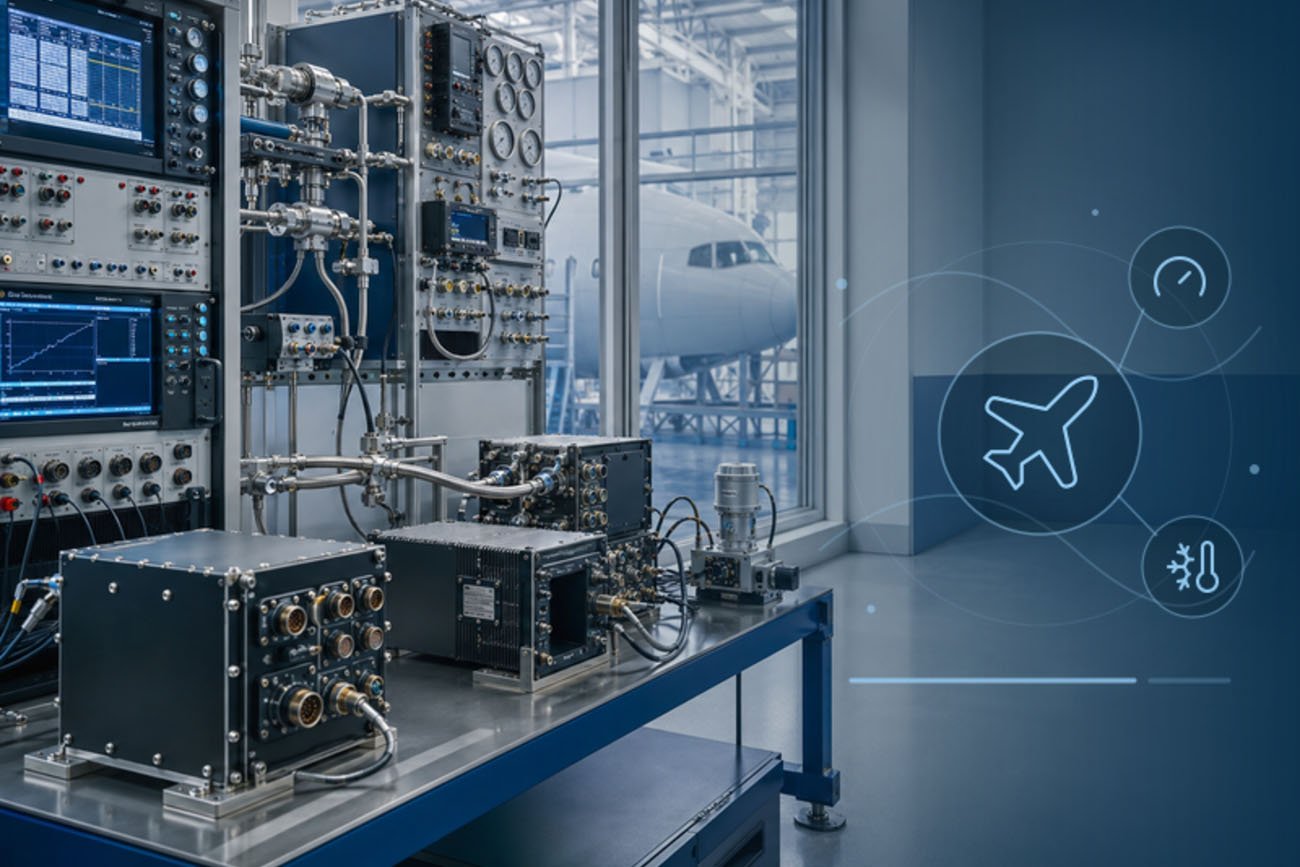
Aircraft and high-altitude platforms expose electronics to a combination of low pressure, temperature extremes, rapid transitions and limited cooling. Avionics that performs normally at sea level may behave differently when reduced air density changes convection, insulation behavior or the operation of sealed assemblies.
Altitude testing is therefore more than pulling a vacuum. The test system must reproduce the specified pressure-temperature history while supporting powered operation, monitoring and safe pressure control.
Understand what low pressure changes
Reduced air density can decrease convective cooling and raise the temperature of power supplies, processors and passive components. Fans move less mass even when rotational speed is unchanged. Electrical clearances and insulation systems may also respond differently, while sealed housings can experience pressure differential.
If the specimen contains trapped gas, fluids, batteries or pressure-sensitive components, define allowable decompression rate and failure precautions before testing.
Combine altitude with the correct thermal condition
Altitude profiles may include ground operation, ascent, cruise, descent and rapid decompression events. Temperature can vary during each stage. The chamber should control pressure and temperature according to the approved sequence, with clear transition rates and stabilization criteria.
Product temperature may lag behind chamber air, especially in dense avionics boxes. Place sensors at representative heat sources, structural points and air inlets. For powered operation, simulate realistic electrical load and record thermal protection or performance changes.
Engineer the interfaces
Avionics tests often require power, communication, RF, optical or pneumatic connections through the chamber wall. Each penetration must maintain pressure integrity and avoid adding uncontrolled heat paths. Cable selection should account for low-pressure compatibility and the complete temperature range.
Useful design inputs include:
- Specimen dimensions, mass and heat dissipation.
- Minimum pressure or simulated altitude.
- Temperature range and transition sequence.
- Powered states and duty cycle.
- Number and type of electrical, optical or fluid interfaces.
- Independent safety sensors and shutdown logic.
- Required decompression or repressurization rate.
Verify system performance
Pressure and temperature control interact. Cooling performance can change at low pressure, and specimen heat rejection can become the dominant load. Qualification should confirm the chamber’s ability to follow the required combined profile with the installed specimen or a representative thermal load.
Synchronize pressure, temperature, specimen function and electrical data. This allows engineers to identify whether a failure relates to altitude, temperature, transition rate or self-heating.
Follow the approved aerospace method
RTCA identifies DO-160G as the current published version of Environmental Conditions and Test Procedures for Airborne Equipment on its official DO-160 page. Aerospace and high-reliability programs may also reference high-reliability, IEC or customer-specific methods. The test category, procedure and equipment limits must come from the project compliance plan; a chamber supplier should not infer them.
SCICOOLING configures low-pressure, temperature and rapid-change systems with customized feedthroughs, data interfaces and safety controls. A successful altitude test reproduces the combined environment while preserving full visibility into the specimen’s thermal and functional response.
Related Chambers
Explore SCI Altitude and Low-Pressure Test Chambers and the CTA Low-Pressure Test Chamber Series. Submit your altitude and temperature test requirements for configuration support.